
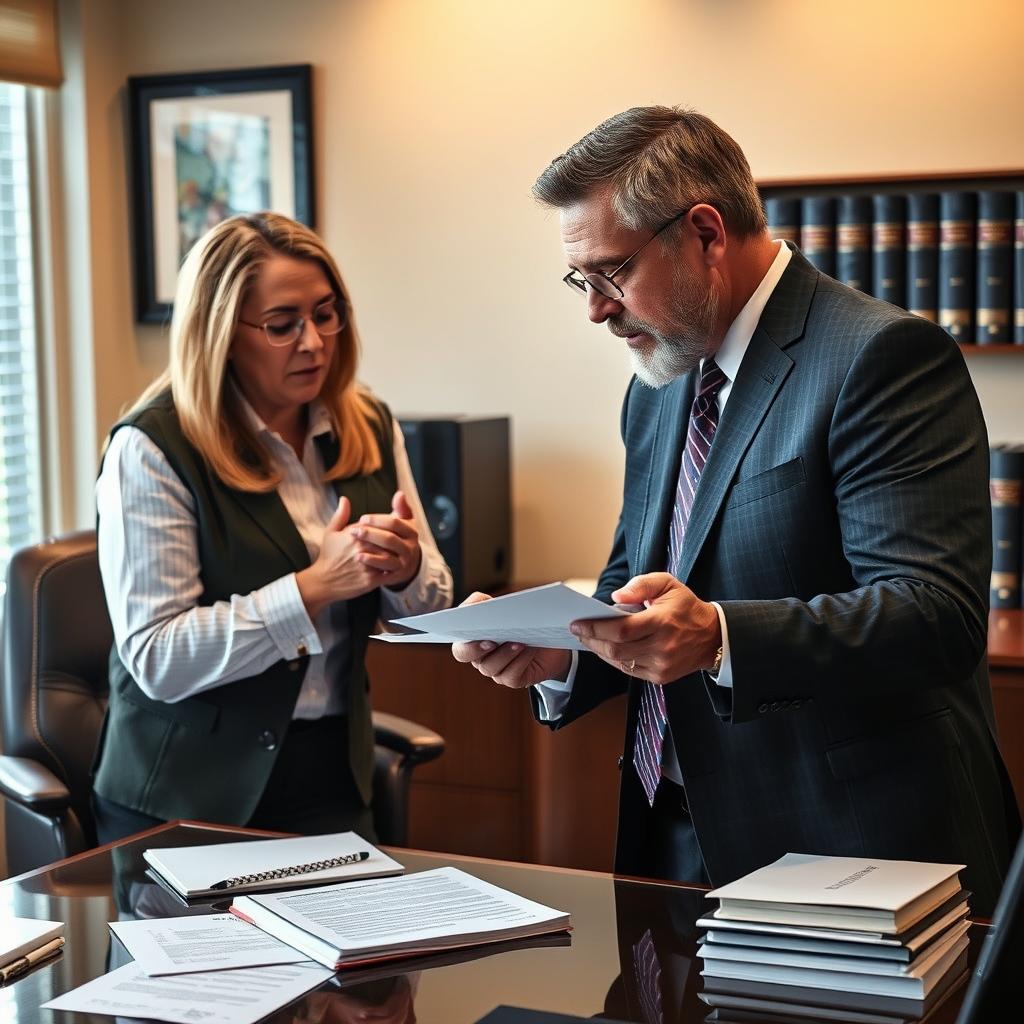
Business Agreement Lawyer Fairfax County, VA
Business agreements govern the relationships, obligations, and expectations between business owners, partners, investors, and third parties in Fairfax County. A well-drafted agreement reduces the risk of disputes and protects your interests, whether you are forming a new venture, entering a commercial transaction, or resolving a disagreement. Law Offices Of SRIS, P.C. represents businesses and individuals in Fairfax County on matters involving operating agreements, partnership agreements, confidentiality agreements, purchase and sale agreements, and related contract disputes. Mr. Sris and his Of Counsel bring extensive experience in Virginia business law to guide clients through negotiation, drafting, and, when necessary, litigation. To request a consultation, reach Law Offices Of SRIS, P.C. at (888) 437-7747. Law Offices Of SRIS, P.C. — Advocacy Without Borders.
What Business Agreement Matters Mean in Fairfax County
Business agreement issues in Fairfax County are shaped by Virginia’s statutory framework and the commercial environment of Northern Virginia. Most business entities operating in the county—whether limited liability companies, corporations, or partnerships—are governed by the Virginia Stock Corporation Act (Va. Code § 13.1-601 et seq.), the Virginia Limited Liability Company Act (§ 13.1-1000 et seq.), or the Virginia Uniform Partnership Act (§ 50-73.79 et seq.). These statutes define the default rules for ownership, management, and dissolution, but many of those rules can be modified by agreement among the owners. A written operating or partnership agreement clarifies each party’s rights, duties, and share of profits, which is especially important when multiple principals are involved.
Disputes arising from business agreements often proceed in the Fairfax County Circuit Court, located at 4110 Chain Bridge Road, Fairfax. The court handles contract claims, business torts, and equitable matters involving corporate governance. Because the court’s scheduling and procedures differ from those of the General District Court, having counsel familiar with the local rules can help ensure that pleadings and motions are presented effectively. Whether the matter involves a breach of a confidentiality clause, a disagreement over a purchase price, or enforcement of a non-compete, the applicable statutes and the specific terms of the agreement—rather than generic assumptions—control the outcome.
How Mr. Sris and His Of Counsel Handle Business Agreement Matters
Mr. Sris and his Of Counsel take a practical approach to business agreement work. When a client needs a new agreement, the attorney reviews the business’s structure, goals, and relationships to identify the provisions that matter most: management authority, capital contributions, profit-sharing, buyout procedures, and dispute-resolution mechanisms. The agreement is drafted to reflect the parties’ actual understanding, using clear language that reduces the likelihood of future disagreements. For existing agreements, the review focuses on whether the terms have been followed and whether any breach has occurred.
If a dispute cannot be resolved through negotiation, Mr. Sris and his Of Counsel are prepared to advocate in court. Contract litigation in Fairfax County involves pleadings filed under the Virginia Rules of Supreme Court, discovery to gather documents and testimony, and, where appropriate, motions for summary judgment or settlement conferences. The strategy in each case depends on the specific allegations, the governing law, and the client’s business objectives. Throughout the process, the attorney keeps the client informed and explains the potential risks and benefits of each option.
About Mr. Sris and His Of Counsel Team
Mr. Sris is the Owner and Founder of Law Offices Of SRIS, P.C. A former prosecutor who has practiced since 1997, he is admitted in Virginia, Maryland, the District of Columbia, New Jersey, and New York. He has appeared in Fairfax County courts and understands the procedural expectations of local judges and clerks. His experience includes testifying before the Virginia House Courts of Justice Committee in support of 2019 HB 635 (chief patron Del. David Bulova). While his personal practice concentrates on high-stakes litigation, the firm’s business law matters are handled collaboratively with his Of Counsel team.
Mr. Sris and his Of Counsel bring over 120 years of combined legal experience and have achieved 4,739+ documented firm-wide results. Results may vary. The team includes attorneys with substantial backgrounds in business and contract law, commercial litigation, and negotiation. Each Of Counsel attorney is engaged through Excella and works under the firm’s supervision. Whether a client requires a straightforward operating agreement or representation in a complex breach-of-contract lawsuit, the team works to achieve a favorable outcome.
Frequently Asked Questions
Do I need a lawyer to draft a business agreement in Fairfax County?
A lawyer is not legally required to draft a business agreement in Virginia, but legal guidance helps ensure the document reflects the parties’ actual understanding and complies with applicable statutes. While form agreements are available, they often fail to address the specific needs of a Fairfax County business, especially those involving multiple owners, complex capital structures, or regulatory considerations. An attorney can draft provisions that anticipate future events—such as a member’s departure, a deadlock, or a sale—and can help avoid language that creates unintended obligations. For a consultation, reach Mr. Sris and his Of Counsel at (888) 437-7747.
What is the difference between an operating agreement and a partnership agreement?
An operating agreement governs the internal affairs of a limited liability company, while a partnership agreement governs the relationship among partners in a general or limited partnership under Virginia law. Both documents address management, profit allocation, voting rights, and transfer of interests. The Virginia LLC Act (Va. Code § 13.1-1000 et seq.) provides default rules for LLCs, but the operating agreement can override most of them. The Virginia Uniform Partnership Act (§ 50-73.79 et seq.) similarly permits partners to modify their rights and duties by agreement. Without a written agreement, the statutory defaults control, which may not produce the result the parties intended.
Can I enforce a verbal business agreement in Fairfax County?
Oral contracts are generally enforceable in Virginia, but proving their terms can be difficult if a dispute arises. Under Virginia law, certain agreements—such as those that cannot be performed within one year or involving the sale of real estate—must be in writing to be enforceable (statute of frauds). For everyday business dealings, a written agreement provides a clear record of the parties’ intentions, reduces the risk of memory lapses, and can be presented as evidence in court if necessary. To discuss the details of your matter, contact Law Offices Of SRIS, P.C. at (888) 437-7747.
What should I look for in a business purchase agreement?
A thorough purchase agreement should clearly describe the assets or ownership interests being sold, the purchase price and payment terms, representations and warranties, conditions to closing, and post-closing obligations such as non-competes or indemnities. In Fairfax County, where many transactions involve technology or government-contracting businesses, special attention must be given to intellectual property assignments, regulatory approvals, and the transfer of licenses. Mr. Sris and his Of Counsel review each clause to confirm it aligns with the client’s objectives and applicable Virginia law.
How does the Virginia State Corporation Commission affect my business agreement?
The Virginia State Corporation Commission (SCC) oversees entity formation and annual registration, so your business agreement must be consistent with the organizational documents filed with the SCC. For example, an LLC’s articles of organization filed with the SCC establish the entity’s existence, but the operating agreement—which is not filed publicly—details the members’ rights. If the operating agreement contradicts the articles, the articles generally control. An attorney can coordinate the filings and the agreement to avoid conflicts. For guidance on your specific situation, reach Law Offices Of SRIS, P.C. at (888) 437-7747.
Attorney advertising. Prior results do not guarantee a similar outcome.
Attorney responsible for this advertising: Mr. Sris.
Results may vary.
Case results depend on a variety of factors unique to each case.