
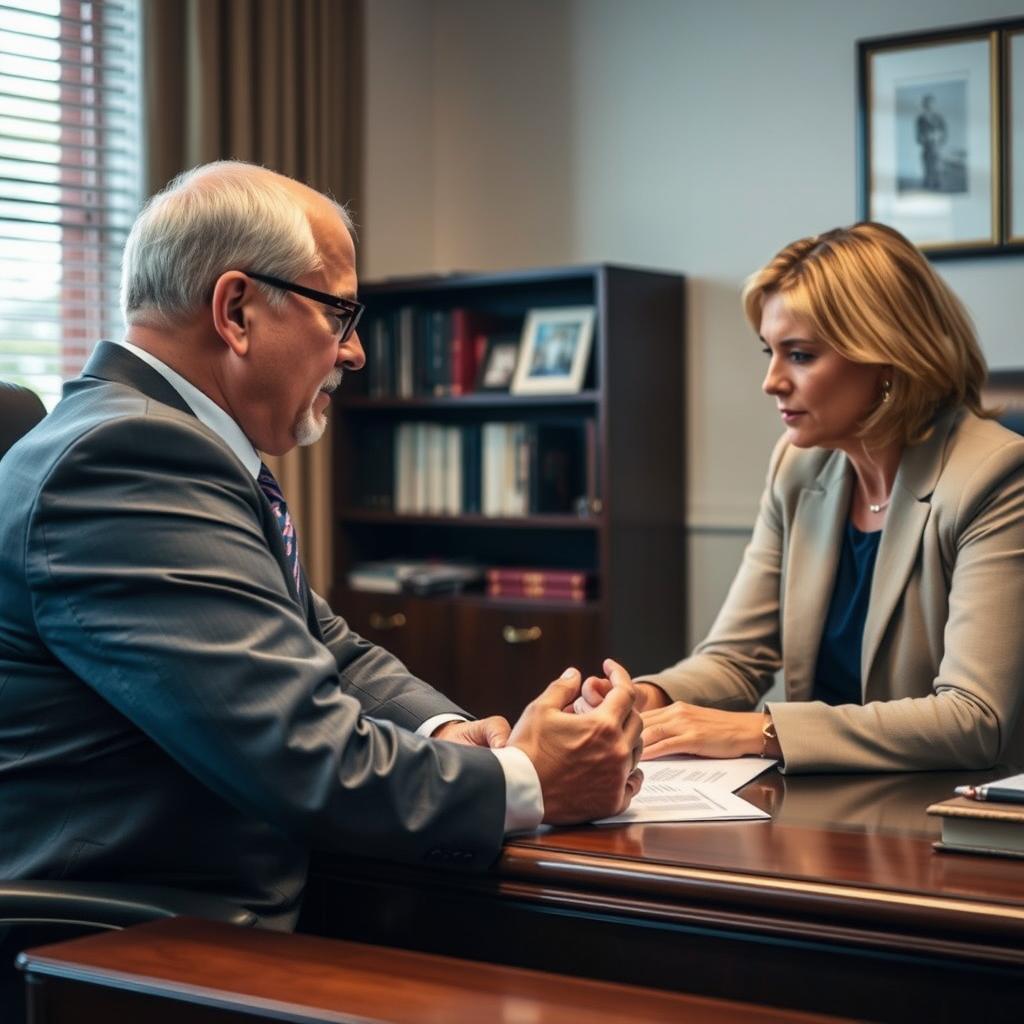
Spousal Support Lawyer Prince William County, VA
If you are navigating a spousal support issue in Prince William County, you need an attorney who understands Virginia’s equitable distribution framework and the specific practices of the Prince William County Circuit Court. Spousal support—also called alimony—can be a central concern whether you are negotiating a separation agreement, seeking a temporary support order during divorce, or addressing post-divorce modification or enforcement. The court considers a range of financial and personal factors under Virginia law, and the outcome can significantly affect your obligations or the support you receive. Mr. Sris and the firm’s Of Counsel attorneys represent clients in Prince William County spousal support matters, from initial consultations through litigation if needed. To request a consultation, call (888) 437-7747.
What Spousal Support Means in Prince William County
Spousal support is financial assistance one spouse may pay to the other during or after divorce. In Virginia, it is governed by Va. Code § 20-107.1, which lists numerous factors the court evaluates, including each spouse’s earning capacity, the standard of living established during the marriage, the duration of the marriage, contributions to the family, and the age and health of the parties. Virginia is an equitable distribution state, meaning property is divided fairly but not necessarily equally; spousal support is determined separately from property division, although the overall financial picture of both spouses matters.
In Prince William County, spousal support cases are heard in the Prince William County Circuit Court, which has exclusive jurisdiction over divorce and all associated relief, including spousal support, equitable distribution, and attorney fees. The court is located at 9311 Lee Avenue, Suite 230, Manassas, VA 20110. The Circuit Court can order pendente lite (temporary) support while a divorce is pending, rehabilitative support for a period after divorce, or indefinite support when fairness requires it. The court may also modify an existing spousal support award if a party shows a material change in circumstances, and it has authority to enforce support obligations through contempt proceedings when a payor fails to comply.
From our Fairfax location, Mr. Sris and the firm’s Of Counsel attorneys regularly appear in Prince William County Circuit Court for spousal support hearings, motions, and trials. We work with clients to structure separation agreements that address spousal support clearly and to present evidence on the statutory factors when a contested hearing is necessary.
How Mr. Sris and the Firm’s Of Counsel Attorneys Handle Spousal Support Matters
Every spousal support case begins with a thorough evaluation of the financial circumstances of both parties. Our attorneys review income documentation, tax returns, employment records, and other relevant financial information. We analyze how the statutory factors apply to your situation—for example, whether a spouse has sacrificed career opportunities during the marriage, whether one party faces significant health challenges, or whether the standard of living during the marriage justifies ongoing support.
Many spousal support matters are resolved through negotiation as part of a comprehensive separation agreement. Mr. Sris and the firm’s Of Counsel attorneys work to draft settlement language that protects your interests and complies with Virginia law. When an agreement is not possible, we are prepared to litigate the issue before the Prince William County Circuit Court. In addition to initial support determinations, we handle post-divorce modifications when income or living circumstances change and enforcement actions when a former spouse fails to pay court-ordered support. Throughout the process, we focus on achieving outcomes that reflect the legal standards and the facts of your case.
About Mr. Sris and the Firm’s Of Counsel Attorneys
Mr. Sris is the Owner and Founder of Law Offices Of SRIS, P.C. A former prosecutor, he founded the firm in 1997 and is admitted to practice in Virginia, Maryland, the District of Columbia, New Jersey, and New York. Mr. Sris testified before the Virginia House Courts of Justice Committee in support of 2019 HB 635 (chief patron Del. David Bulova). He brings a multi-jurisdictional perspective to family law matters and has handled spousal support issues for clients throughout Northern Virginia.
The firm’s Of Counsel attorneys provide additional experience in family law, domestic relations, and related areas. Combined with Mr. Sris’s background, they offer the thorough preparation and advocacy spousal support cases require. Whether your matter involves straightforward support calculations or complex financial issues intertwined with equitable distribution, our attorneys work to protect your rights and present a clear picture to the court.
Frequently Asked Questions
How is spousal support determined in a Prince William County divorce?
Spousal support in Prince William County is determined by evaluating the statutory factors in Va. Code § 20-107.1. The court considers the financial needs and resources of each spouse, the standard of living during the marriage, the length of the marriage, the age and physical and emotional condition of both parties, and the contributions each spouse made to the family, including non-monetary contributions. In a contested case, the judge weighs all the evidence and issues a support order that aims to be fair under the circumstances. The court may award temporary support while the divorce is pending, rehabilitative support to help a spouse become self-sufficient, or indefinite support in longer marriages or when the recipient spouse cannot reasonably become self-supporting. For guidance on your specific situation, reach Law Offices Of SRIS, P.C. at (888) 437-7747.
Can a spousal support order be modified after the divorce is final?
Yes, a Virginia spousal support order may be modified if the party seeking the change demonstrates a material change in circumstances that was not anticipated at the time of the original order. For example, a significant increase or decrease in either party’s income, a serious illness, or the loss of employment may justify a modification. The party seeking modification must file a motion with the Prince William County Circuit Court and present evidence supporting the change. The original factors in Va. Code § 20-107.1 still guide the court’s analysis, but the focus is on whether the change is material and whether it warrants an adjustment. To discuss the details of your matter, contact Law Offices Of SRIS, P.C. at (888) 437-7747.
What can I do if my ex-spouse refuses to pay court-ordered spousal support?
When a former spouse fails to pay court-ordered spousal support, you can seek enforcement through the Prince William County Circuit Court. The court has authority to hold the non-paying party in contempt, which can result in fines, attorney’s fees, and in some cases even jail time if the violation is willful. The contempt proceeding typically involves showing that a valid support order exists, that the payor had knowledge of the order and the ability to pay, and that the payor failed to comply. Enforcement can also include income withholding or other collection mechanisms. For a consultation, reach Mr. Sris and the firm’s Of Counsel attorneys at (888) 437-7747.
Does adultery or fault affect spousal support in Virginia?
Yes, Virginia law allows the court to consider fault, including adultery, when determining spousal support. Under Va. Code § 20-107.1, one of the factors the court may weigh is the circumstances and factors that contributed to the dissolution of the marriage. If the court finds that one spouse’s misconduct, such as adultery, caused the separation, the court may deny support to the at-fault spouse or adjust the amount and duration of support accordingly. However, fault is only one factor among many, and the court still examines the overall financial picture. An experienced spousal support lawyer can explain how fault may apply to your case.
Is spousal support taxable in Virginia?
Under current federal law, spousal support payments are not tax-deductible for the payor and not included as taxable income for the recipient for divorce agreements executed after December 31, 2018. For divorces finalized before 2019, the old tax treatment may still apply if the agreement has not been modified to incorporate the new rule. Virginia generally follows the federal tax treatment for state income tax purposes. Because tax implications can significantly affect the economic value of a support arrangement, we advise clients to consult with a tax professional and an experienced family law attorney when negotiating spousal support.
Do I need a lawyer to handle spousal support issues in Prince William County?
While you are not required to have an attorney, spousal support matters involve complex legal standards and financial analysis that benefit from experienced representation. An attorney can help you understand how the statutory factors apply to your circumstances, gather and present the financial evidence the court needs, and negotiate a separation agreement that protects your long-term interests. In contested proceedings before the Prince William County Circuit Court, having a lawyer who knows the local procedures and the tendencies of the bench can be a significant advantage. To discuss your situation with Mr. Sris and the firm’s Of Counsel attorneys, call (888) 437-7747.
Spousal Support Resources for Related Virginia Counties
If you need representation in other Northern Virginia localities, we also serve clients in:
- Family law representation across Virginia
- Spousal support lawyer in Fairfax County
- Spousal support lawyer in Stafford County
- Spousal support lawyer in Loudoun County
Primary Legal Resources
You can review the relevant Virginia statutes and court information through these official sources:
Attorney advertising. Prior results do not guarantee a similar outcome. Case results depend on a variety of factors unique to each case.