
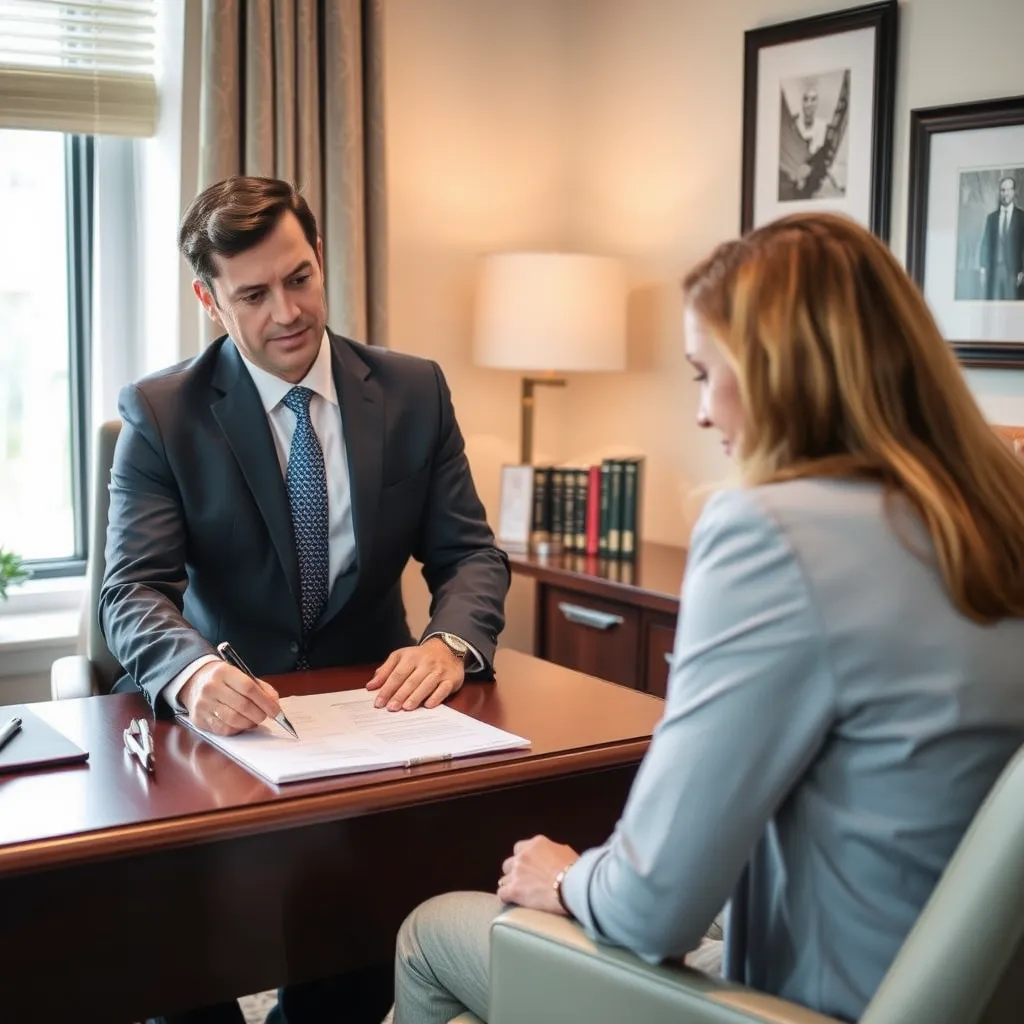
Post Divorce Modification Lawyer Falls Church, VA
When a final divorce decree no longer reflects the realities of life in Falls Church, Virginia, a post-divorce modification may be necessary. The Falls Church Circuit Court at 300 Park Avenue retains jurisdiction over divorce, equitable distribution, and spousal support matters, while the Falls Church Juvenile and Domestic Relations District Court handles custody, visitation, and child support. A change in income, employment, health, or a child’s needs can open the door to modifying court orders. Mr. Sris and the firm’s Of Counsel attorneys appear regularly in these courts and understand the procedural requirements and statutory standards that govern modification petitions. Whether you seek to adjust spousal support, child support, custody, or visitation, careful preparation is essential. The court will evaluate whether a material change in circumstances has occurred since the last order was entered. For guidance on your situation, reach Law Offices Of SRIS, P.C. at (888) 437-7747. Law Offices Of SRIS, P.C. – Advocacy Without Borders.
What Post-Divorce Modification Means in Falls Church, Virginia
Virginia law permits modification of certain divorce-related orders when a party demonstrates a material change in circumstances. Spousal support modification is governed by Va. Code § 20-109, which directs the court to apply the same factors used in an initial support determination under Va. Code § 20-107.1. Child support modifications fall under Va. Code § 20-108.1 and § 20-108.2, and the court applies the Virginia child-support guidelines unless a deviation is warranted. Custody and visitation modifications are resolved under the trusted-interests-of-the-child standard in Va. Code § 20-124.3, which lists ten factors the court must consider. In Falls Church, the Circuit Court hears spousal support and divorce-decree enforcement matters, while the Juvenile and Domestic Relations District Court handles standalone custody, visitation, and child support modifications. Both courts are located at 300 Park Avenue, Suite 151W, Falls Church, VA 22046, and operate within the Seventeenth Judicial District.
Modification is not automatic. The party seeking the change must present evidence that circumstances have materially changed since the last court order. For child support, a difference between the current support amount and the guidelines amount may, by itself, be considered a material change. For spousal support, the analysis is broader and includes factors such as a significant change in either party’s income, health, or the recipient’s ability to become self-supporting. Falls Church residents benefit from having experienced multi-state counsel who can assemble the financial documentation, testimony, and argument necessary to meet the court’s material-change threshold. Our Fairfax Location serves clients throughout Falls Church and is familiar with the local judges and procedures that shape these cases.
How Mr. Sris and the Firm’s Of Counsel Attorneys Handle Post-Divorce Modification Cases
Every post-divorce modification begins with a clear understanding of the existing order and the changes that have occurred. Mr. Sris and the firm’s Of Counsel attorneys will review the divorce decree, any prior modification orders, and the financial and custodial circumstances that have evolved. We then identify the legal basis for the modification and gather evidence—pay stubs, tax returns, medical records, custody journals, and other documentation—to support the petition. If the matter can be resolved by agreement, we draft a consent order that reflects the new terms and present it to the court for entry.
When agreement is not possible, the case proceeds to a hearing. Our attorneys prepare motions, respond to discovery, and present testimony and exhibits in court. Because the standard is a material change in circumstances, the evidentiary presentation is critical. Mr. Sris’s background as a former prosecutor informs a disciplined, evidence-based approach to courtroom advocacy. The firm’s Of Counsel attorneys bring extensive combined experience in family law litigation across Virginia. Throughout the process, we keep clients informed of filing deadlines, hearing dates, and the steps the court will take. We appear routinely at the Falls Church Circuit Court and Juvenile and Domestic Relations District Court, and we handle modification matters in surrounding counties as well.
About Mr. Sris and the Firm’s Of Counsel Attorneys
Mr. Sris, Owner and Founder of Law Offices Of SRIS, P.C., is a former prosecutor admitted in Virginia, Maryland, the District of Columbia, New Jersey, and New York. He has practiced family law since founding the firm in 1997 and has testified before the Virginia House Courts of Justice Committee in support of 2019 HB 635 (chief patron Del. David Bulova). The firm’s Of Counsel attorneys contribute decades of practical experience in Virginia family law matters, including complex post-divorce modifications involving business interests, retirement assets, and multi-state custodial arrangements. Together, Mr. Sris and his Of Counsel provide clients with a steady, experienced approach to modifying court orders when life circumstances change. Results may vary.
Frequently Asked Questions
What does a post-divorce modification lawyer do in Falls Church, Virginia?
A post-divorce modification lawyer represents individuals who need to change an existing divorce decree because of a material change in circumstances. The attorney evaluates whether the change justifies a modification under Virginia law, prepares the necessary pleadings for the Falls Church Circuit Court or Juvenile and Domestic Relations District Court, and advocates at hearings. The process involves gathering financial and custodial evidence, negotiating with the other party, and, if needed, litigating the matter. Mr. Sris and his Of Counsel handle modifications of spousal support, child support, custody, and visitation.
Do I need a lawyer to modify a divorce decree in Falls Church?
You are not required to hire a lawyer, but representing yourself can be risky because modification depends on meeting a statutory standard—material change in circumstances—that requires evidence and legal argument. A lawyer can identify which changes qualify, assemble the necessary documentation, and present the case effectively. Without counsel, you may fail to meet the court’s evidentiary requirements or agree to terms that are not in your long-term interest. Reach Law Offices Of SRIS, P.C. at (888) 437-7747 to discuss whether legal representation is right for your situation.
How long does a post-divorce modification take in Falls Church?
The timeline varies depending on whether the parties agree, court scheduling, and the complexity of the issues. An uncontested modification with a signed consent order can be resolved in a matter of weeks after filing. Contested modifications that require evidentiary hearings and discovery may take several months or more. The court schedules hearings on its own calendar, and contested custody or financial issues can extend the process. For a more specific estimate based on your circumstances, contact our firm.
What changes justify a spousal support modification in Virginia?
Under Va. Code § 20-109, a spousal support modification requires a material change in circumstances that was not anticipated when the original order was entered. Common changes include a substantial involuntary loss of income by the payor, a significant increase in the payee’s income or cohabitation that reduces need, or a serious health condition affecting either party. The court re-examines the factors in Va. Code § 20-107.1 to determine whether the existing support amount should continue, be reduced, or be increased. Falls Church residents should consult experienced counsel to assess whether their facts meet the statutory standard.
Can child support be modified if my ex-spouse refuses to pay?
Child support enforcement and child support modification are separate legal actions; modification adjusts the support amount, while enforcement seeks compliance with the existing order. If the non-paying parent’s circumstances have changed—for example, a significant drop in income—they may petition to modify the support obligation. Conversely, if the paying parent’s income has increased, the custodial parent may seek an upward modification. In either case, the Falls Church Juvenile and Domestic Relations District Court will apply the guidelines under Va. Code § 20-108.1 and § 20-108.2. For enforcement of a support order, the court can use contempt powers, income withholding, and other remedies.
What is the difference between modifying custody and modifying visitation in Falls Church?
Custody modification changes which parent makes major decisions or with whom the child primarily lives, while visitation modification adjusts the parenting-time schedule without changing legal custody. Both require a showing that a material change in circumstances has occurred since the last order, and the court applies the trusted-interests factors in Va. Code § 20-124.3. Relocation of one parent, a change in the child’s needs, or concerns about the child’s safety can support a modification. The Falls Church Juvenile and Domestic Relations District Court hears custody and visitation modifications unless they are part of a divorce case in Circuit Court.
Related pages:
Virginia Legal Resources:
Attorney advertising. Prior results do not guarantee a similar outcome. Results may vary. Case results depend on a variety of factors unique to each case.