
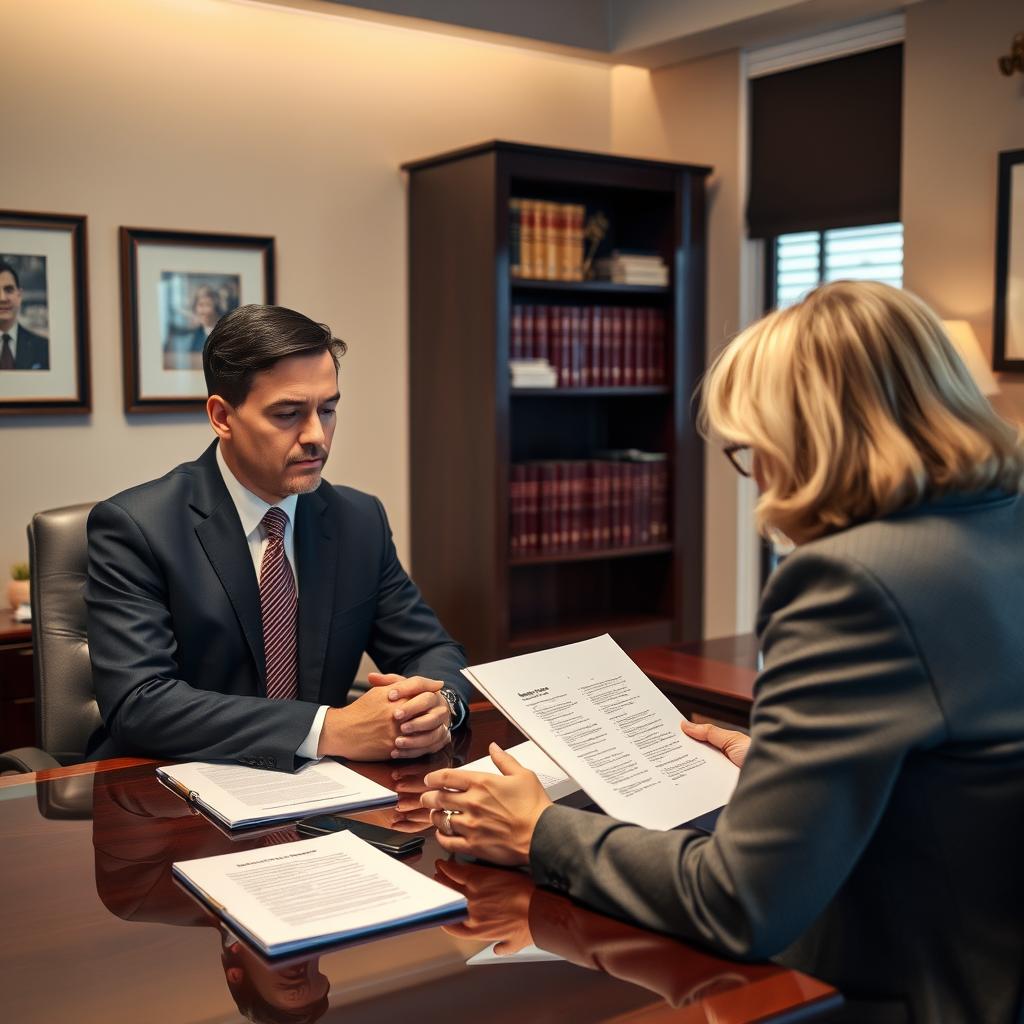
Desertion Divorce Lawyer Arlington County, VA
If you are considering a divorce based on desertion in Arlington County, Virginia, you need an attorney who understands how fault grounds affect the process and the outcome. Law Offices Of SRIS, P.C. represents clients throughout Arlington County, including communities such as Arlington, Crystal City, Rosslyn, Clarendon, and Ballston, in divorce matters filed in the Arlington County Circuit Court. Mr. Sris, Owner and Founder of the firm, and his Of Counsel handle family law cases across Virginia, bringing extensive experience to desertion-based divorce proceedings. Under Virginia law, willful desertion or abandonment for one year is a recognized fault ground for divorce. A desertion divorce can influence property division, spousal support, and custody arrangements, making capable legal representation important. The firm’s Arlington location provides convenient access for clients in the Seventeenth Judicial District, and consultations are available by calling (888) 437-7747. Law Offices Of SRIS, P.C. – Advocacy Without Borders.
What Desertion Divorce Means in Arlington County
Virginia is an equitable distribution state, and the courts in Arlington County apply the fault grounds enumerated in Va. Code § 20-91 when dissolving a marriage. Desertion is one of those fault grounds. It requires that one spouse willfully left the marital home—or otherwise abandoned the marriage—without justification, and that the separation has continued uninterrupted for at least one year. The Arlington County Circuit Court has exclusive original jurisdiction over divorce suits, including those filed on the ground of desertion. The court, located at 1425 N. Courthouse Rd, Suite 2400, Arlington, VA 22201, handles the divorce itself, while the Arlington County Juvenile and Domestic Relations District Court may address any accompanying custody, visitation, or support issues.
Because Arlington County is a dense, urban jurisdiction adjacent to Washington, D.C., the court sees a high volume of divorce cases. Many parties commute into the county or work in government or professional roles. The court evaluates desertion claims under well-established Virginia case law. To succeed, the filing spouse must prove that the departure was willful and that they did not consent to it. Evidence such as a spouse’s correspondence, financial records, and witness testimony may be required. A property settlement agreement, if the parties reach one, can resolve issues like equitable distribution and spousal support without trial. Mr. Sris and his Of Counsel are familiar with the procedures of the Arlington County Circuit Court and can guide clients through the process.
How Mr. Sris and His Of Counsel Handle Desertion Divorce Cases
Desertion-based divorce cases require careful attention to the facts because the ground itself may be disputed. Mr. Sris and his Of Counsel begin by evaluating the circumstances of the separation: when and how the spouse left, whether any attempt was made to return, and whether the party who remained at home consented or acquiesced. In many instances, the party accused of desertion will raise defenses, such as that they were forced to leave due to cruelty or that the separation was by mutual agreement. The legal team works to gather the necessary evidence and to present it clearly to the court. They also address the financial and parenting issues that accompany any divorce—such as the classification and valuation of marital property, the potential for spousal support, and the trusted-interests factors governing child custody under Va. Code § 20-124.3.
The procedural path in Arlington County mirrors the standard Virginia divorce process. A complaint must be filed in the Circuit Court, and the ground of desertion must be specifically pleaded. If the desertion claim is contested, the case may proceed through discovery, motions, and eventually a trial where the court hears testimony and examines evidence. Throughout, Mr. Sris and his Of Counsel work to protect the client’s interests and to seek a resolution that acknowledges the circumstances of the desertion. While outcomes in any litigation are uncertain, experience with the local court can help a party present their case effectively. Results may vary.
About Mr. Sris and His Of Counsel Team
Mr. Sris, Owner and Founder of Law Offices Of SRIS, P.C., has practiced law since 1997. A former prosecutor, he founded the firm to provide multi-state representation in criminal defense, family law, and other matters. He is admitted in Virginia, Maryland, the District of Columbia, New Jersey, and New York. His Of Counsel attorneys include experienced litigators who handle family law matters across Virginia’s courts. Together, the team brings substantial legal experience to divorce cases, including those involving allegations of desertion, adultery, or cruelty.
The firm’s Arlington location serves clients in Arlington County and the surrounding region. Appointments are available by scheduling in advance; phone consultations can be arranged 24 hours a day, seven days a week. Mr. Sris and his Of Counsel emphasize a reasoned approach to every case, working toward favorable outcomes while helping clients understand their rights and options under Virginia law.
Frequently Asked Questions
What does “desertion” mean as a divorce ground in Virginia?
Desertion is a fault ground for divorce in Virginia that requires proof that one spouse willfully left the marital home and abandoned the marriage without justification for at least one year. The full text of Va. Code § 20-91 lists willful desertion or abandonment as a basis for a divorce from the bond of matrimony. The spouse who was deserted must not have consented to the departure. If the deserting spouse later offers to return and that offer is rejected without good cause, the deserting spouse may no longer be considered at fault. Evidence such as written communications and witness testimony is often needed to establish the facts.
How long must the desertion last before I can file for divorce in Arlington County?
The statute requires that willful desertion continue for a period of one year before it may serve as a ground for divorce in Virginia. The filing can be made in the Arlington County Circuit Court once the one-year period has run. The clock begins when the deserting spouse leaves the marital home without consent and without intent to return. Short-term separations that do not meet the one-year threshold may not support a fault divorce, although no-fault grounds based on separation may become available after six months or one year under other provisions of § 20-91.
Do I need a lawyer for a desertion divorce in Arlington County?
While you are not required to hire a lawyer, a desertion divorce often involves disputed facts that make competent representation highly advisable. Proving desertion can require gathering and presenting evidence that the opposing party may challenge. An attorney can help identify the documents and testimony needed, draft pleadings that properly plead the ground, and represent you at hearings. Mr. Sris and his Of Counsel are experienced in handling divorce matters in Arlington County and can assist you in navigating the procedural requirements of the Circuit Court.
How does a desertion finding affect property division and spousal support?
A desertion finding can affect the court’s equitable distribution and spousal support determinations because fault is one of the statutory factors the court considers. Under Va. Code § 20-107.3, the court weighs multiple factors, including the circumstances and factors that contributed to the dissolution of the marriage. If the court finds that one spouse’s desertion caused the breakdown, that factor may influence the division of marital property or an award of spousal support. However, Virginia law does not require a 50/50 split, and the weight given to fault varies from case to case.
Can I get a desertion divorce if my spouse still communicates with me occasionally?
Occasional contact does not necessarily defeat a desertion claim, but it may be considered by the court when determining whether the departure was truly an abandonment of the marriage. The central question is whether the spouse left without justification and without intent to return to the marital relationship. A few phone calls or emails about children or finances may not change the character of the separation, but regular contact that suggests an ongoing marital relationship could complicate the claim. The facts of each case are unique, and a thorough evaluation with an attorney is recommended.
What if the deserting spouse claims they were forced to leave by my conduct?
If the spouse who left raises a defense that they were compelled to leave due to cruelty or intolerable conditions, the petitioner must be prepared to rebut that claim with evidence. Virginia courts recognize that a spouse is not a deserter if they left because of physical harm or a well-founded fear of harm, or because the other spouse’s conduct made continued cohabitation unbearable. If such a defense is raised, the outcome may depend on the credibility of the parties and the quality of the evidence. An attorney can help develop the factual record to address these issues.
For questions about your specific situation, reach Law Offices Of SRIS, P.C. at (888) 437-7747.
Related family law resources:
Fairfax County family law lawyer
Prince William County family law lawyer
Loudoun County family law lawyer
Stafford County family law lawyer
Fauquier County family law lawyer
Virginia primary source references:
Virginia Code Title 20 – Domestic Relations
Arlington County Circuit Court
Virginia Judicial System
Attorney advertising. Prior results do not guarantee a similar outcome. Results may vary. Case results depend on a variety of factors unique to each case.