
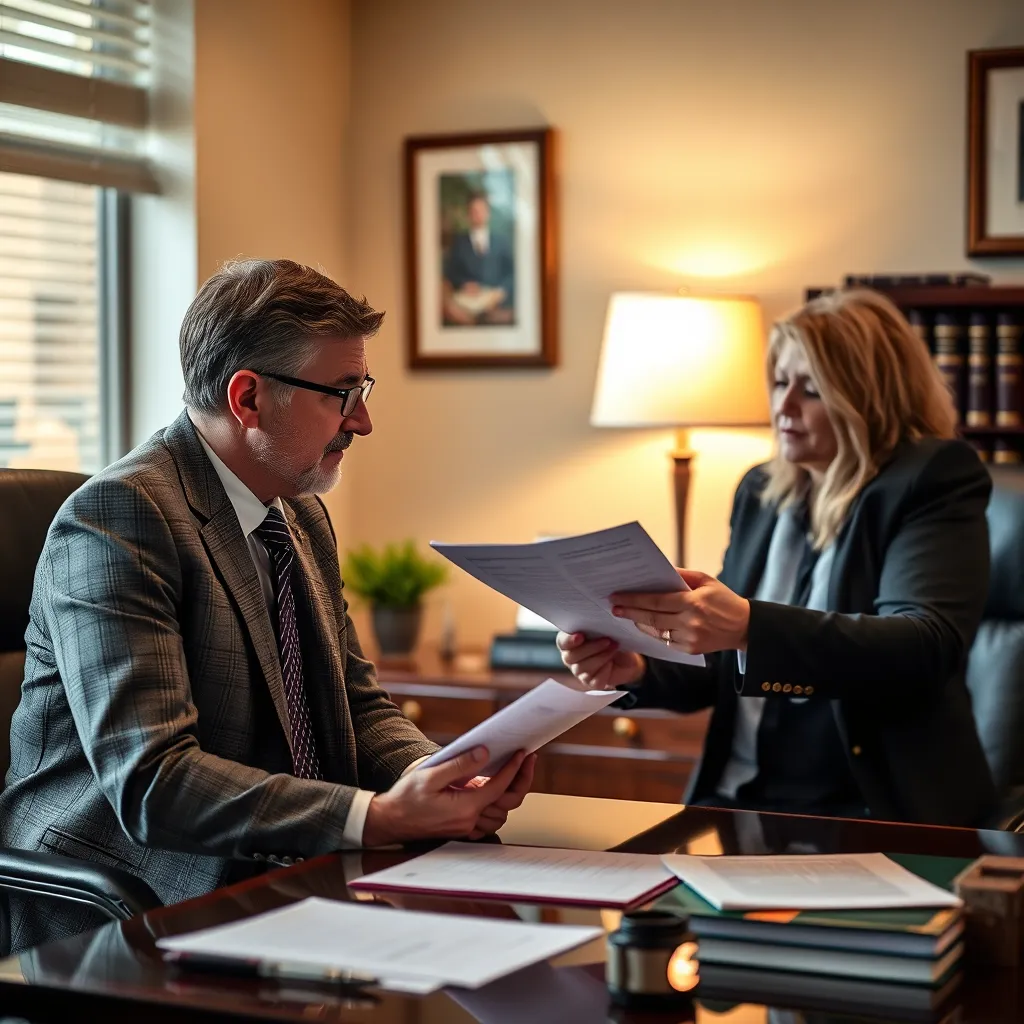
Fault Based Divorce Lawyer Manassas, VA
You discovered that your spouse has been unfaithful. Or perhaps you have endured cruelty that makes staying in the marriage unbearable. You are in Manassas, Virginia, and you want out—not years from now, but as soon as the law allows. A fault‑based divorce can give you that path. When the behavior of one spouse has destroyed the marriage, Virginia law does not require you to wait out a lengthy separation. You can file immediately on recognized fault grounds. Mr. Sris and his Of Counsel team at Law Offices Of SRIS, P.C. represent spouses in Manassas who need to pursue a divorce based on the misconduct of the other party. Reach the firm at (888) 437‑7747 to request a consultation about filing a fault‑based divorce in the Manassas Circuit Court. Law Offices Of SRIS, P.C. – Advocacy Without Borders.
Your Options When Misconduct Ends the Marriage
Virginia offers two broad paths to divorce: no‑fault and fault‑based. Under Va. Code § 20‑91, you may be able to file a fault‑based complaint immediately if you can prove one of the statutory grounds. The recognized fault grounds in Virginia are adultery, cruelty or reasonable apprehension of bodily hurt, willful desertion or abandonment for one year, and conviction of a felony with a sentence of more than one year of confinement. A fault‑based filing does not require the six‑month or one‑year separation period that a no‑fault divorce demands. When you are ready to move forward right away, asserting fault can be the most direct route.
The choice of ground matters because it can affect how property is divided and whether spousal support is awarded. Virginia is an equitable‑distribution state, not a community‑property state; under Va. Code § 20‑107.3, the court divides marital property fairly but not necessarily equally. When one spouse’s misconduct caused the breakdown of the marriage, the court may weigh that fact against the responsible party. Mr. Sris and his Of Counsel evaluate your situation to help you decide whether a fault‑based filing offers strategic advantages beyond simply ending the marriage sooner.
What to Expect When You File a Fault‑Based Divorce in Manassas
A fault‑based divorce is a contested matter from the start. You file a Complaint for Divorce in the Manassas Circuit Court, located at 9311 Lee Avenue, Suite 230, Manassas, Virginia 20110. The complaint must state the specific ground you are relying on and contain enough factual detail to support it. Your spouse must be served with the complaint and will have an opportunity to respond. If your spouse denies the allegation of fault, the case proceeds to litigation, and you will need to present evidence proving the ground at trial.
The procedural steps—pleadings, discovery, possible pendente lite hearings for temporary support and custody—are identical to those in any contested divorce. The difference is that the core issue at trial is whether the alleged misconduct occurred. Virginia law requires corroboration: an uncontested divorce hearing ordinarily needs a corroborating witness, and for a fault trial the evidence itself must be proved by testimony, documents, or other admissible proof. Mr. Sris and his Of Counsel prepare each case thoroughly, gathering the necessary evidence and witness testimony to present a strong record to the judge.
How Fault Can Influence the Outcome
Fault is not a punishment tool, but it can shift important financial outcomes. Under Va. Code § 20‑107.3, the court considers the circumstances and factors that contributed to the dissolution of the marriage when dividing marital property. A spouse whose adultery or cruelty destroyed the relationship may receive a smaller share of the marital estate. Similarly, under Va. Code § 20‑107.1, the court may consider fault when determining whether to award spousal support and in what amount. A spouse who committed adultery is generally barred from receiving spousal support unless a court finds that a denial would be manifestly unjust based on the specific facts.
Custody and visitation are decided under the trusted‑interests‑of‑the‑child standard set out in Va. Code § 20‑124.3, and fault is not necessarily a controlling factor. However, if the misconduct endangered the child or created a harmful home environment, the court will take that into account. Mr. Sris and his Of Counsel work to present a complete picture of the family circumstances so the judge can make a fully informed decision on custody, support, and property division.
About Mr. Sris and His Of Counsel Team
Mr. Sris, Owner and Founder of Law Offices Of SRIS, P.C., is a former prosecutor with experience in trial work. He understands how to build a case in court—how to gather evidence, examine witnesses, and present a persuasive narrative. His Of Counsel team brings significant experience across multiple practice areas, including contested divorce. The firm has been serving clients in Virginia since 1997. Mr. Sris testified before the Virginia House Courts of Justice Committee in support of 2019 HB 635 (chief patron Del. David Bulova), legislation that revised the equitable‑distribution statute. That firsthand knowledge of Virginia divorce law informs the firm’s approach to every fault‑based divorce matter in Manassas.
When you work with Law Offices Of SRIS, P.C., your case is handled collaboratively by Mr. Sris and his Of Counsel. You receive attention from attorneys who know the Manassas Circuit Court, the procedural rules, and the evidentiary demands of proving fault. The firm represents clients throughout Northern Virginia—from the Fairfax Location at 4008 Williamsburg Court, Fairfax, VA 22032—and appears regularly before the judges who hear divorce cases in Prince William County and the independent cities of Manassas and Manassas Park.
Frequently Asked Questions
What fault grounds can I use to file for divorce in Virginia?
Virginia recognizes four fault grounds under Va. Code § 20‑91: adultery, cruelty or reasonable apprehension of bodily hurt, willful desertion or abandonment for one year, and conviction of a felony with a sentence of more than one year. Adultery is the ground that most often allows an immediate filing because there is no waiting period. Cruelty also permits immediate filing, while desertion and felony conviction require the proscribed period to have elapsed. Each ground must be proved with competent evidence; a mere suspicion is insufficient. Mr. Sris and his Of Counsel evaluate the facts of your case and advise whether a fault ground is available and provable.
Do I have to prove adultery to get a divorce based on fault?
Yes, the spouse asserting adultery must present clear and convincing evidence that the other spouse had sexual intercourse with a third party during the marriage. Direct evidence—photographs, eyewitness testimony, or an admission—is the strongest proof. Circumstantial evidence, such as a pattern of unexplained absences combined with other suspicious behavior, may also be considered, but Virginia courts require more than a mere suspicion. Our team works with clients to evaluate the available evidence before filing, so you understand what you can prove and what the case will require.
Can I get spousal support if I was the victim of my spouse’s cruelty?
Spousal support is available if the court finds that you need it and your spouse has the ability to pay, regardless of who was at fault. But a finding that your spouse committed cruelty may strengthen your request because the court weighs the “circumstances and factors” contributing to the breakup under Va. Code § 20‑107.1. A spouse who committed cruelty cannot be barred from receiving support based solely on that cruelty, but the judge has broad discretion to consider the misconduct when setting the amount and duration of support.
How long does a fault‑based divorce take in Manassas?
The timeline varies depending on whether your spouse contests the allegations. If your spouse admits the fault or defaults by failing to respond, a final decree may be entered several months after filing. If the fault is contested, the case proceeds through discovery and a trial, which can extend the timeline. The Manassas Circuit Court’s docket, the availability of witnesses, and the complexity of any related custody or property issues all influence how quickly the matter is resolved. Mr. Sris and his Of Counsel work to move the case forward efficiently while protecting your legal interests.
What if my spouse denies fault—can I still get divorced?
Yes. A denial of fault does not block your divorce; it simply means the case will be contested. You have the right to present your evidence at trial, and the judge will decide whether the alleged ground has been proved. If the court finds that you did not meet your burden of proof on the fault ground, you may still be able to proceed on a no‑fault ground if the required separation period has elapsed or will soon elapse. Mr. Sris and his Of Counsel often align the case so that a no‑fault ground is available as a fallback, preserving your ability to obtain a divorce even if the fault claim is unsuccessful.
Will a fault‑based divorce affect child custody?
Custody is always determined by the best interests of the child under Va. Code § 20‑124.3, not by which parent was at fault in the breakup of the marriage. The court examines factors such as the child’s relationship with each parent, the ability of each parent to meet the child’s needs, and any history of family abuse. Marital misconduct that did not directly affect the child is rarely grounds to alter custody. However, if the fault involved behavior that endangered the child—such as substance abuse or violence—the judge will take that seriously. Our firm helps you frame custody issues in a way that focuses on the child’s welfare.
For guidance on your specific situation, reach Mr. Sris and his Of Counsel at (888) 437‑7747.
Explore related family law services:
Prince William County family law •
Manassas Park family law •
Fairfax City family law •
Falls Church family law
For a comprehensive statutory analysis, visit our main site: Virginia divorce law overview at srislawyer.com.
Law Offices Of SRIS, P.C.
Fairfax Location
4008 Williamsburg Court
Fairfax, VA 22032
Phone: (888) 437‑7747
By appointment only. Call to schedule.
Attorney advertising. Prior results do not guarantee a similar outcome.
Case results depend on a variety of factors unique to each case.