
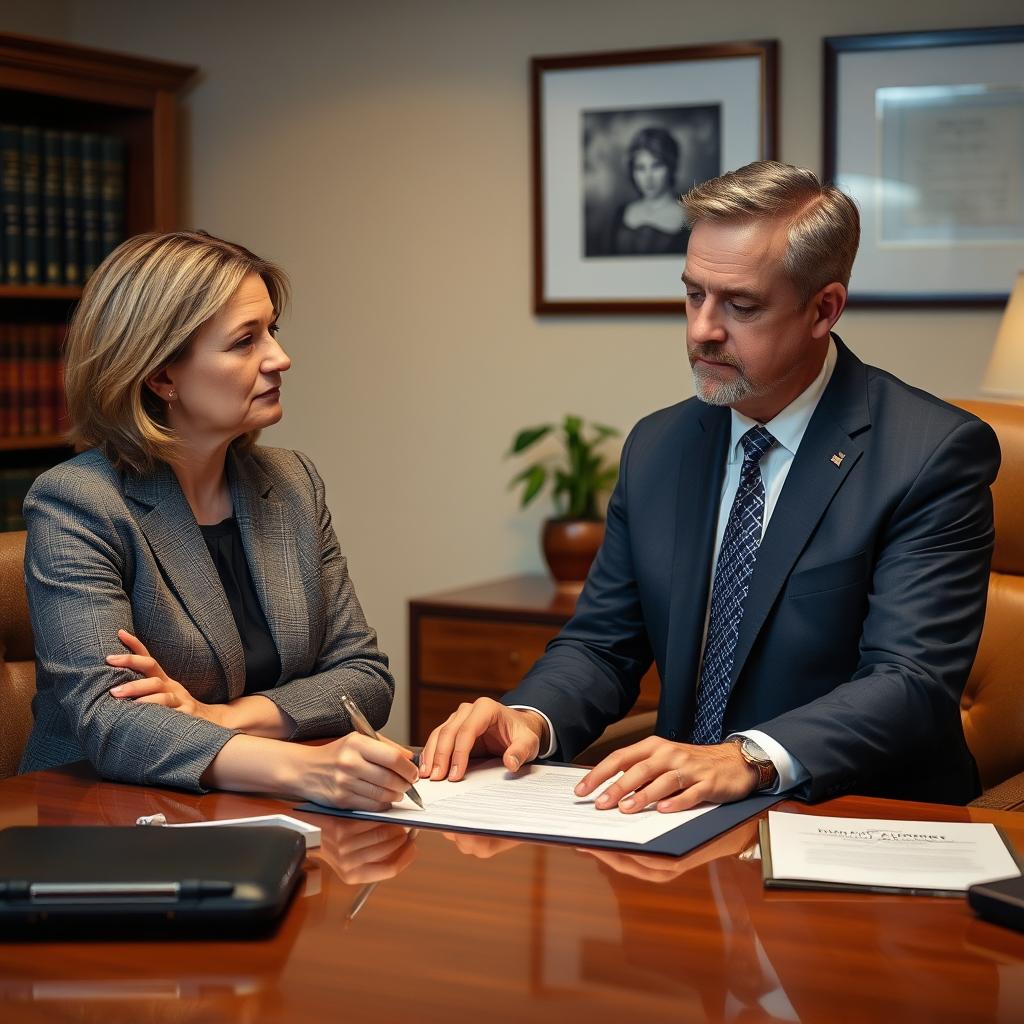
Marital Agreement Lawyer Prince William County, VA
You and your partner have built a life together in Prince William County—maybe in a townhome in Woodbridge or on a few acres near Gainesville—and you’re talking seriously about marriage, or you’re already married and your financial picture has changed. A business was started, an inheritance is pending, or debt obligations have become more complex. You need a clear agreement that respects both of you and holds up if it is ever tested in circuit court. At Law Offices Of SRIS, P.C., Mr. Sris works with couples to negotiate and draft enforceable marital agreements that fit the specific facts of each family. Reach our location at (888) 437-7747. Law Offices Of SRIS, P.C. – Advocacy Without Borders.
Strategy Options: How a Marital Agreement Can Be Structured
Virginia law, particularly the Premarital Agreement Act found in Title 20 of the Virginia Code, gives couples broad latitude to decide their own property, support, and debt arrangements. A marital agreement can be a prenuptial agreement signed before marriage or a postnuptial agreement (sometimes called a property settlement agreement) entered into later. Both are contracts, and both require full and fair disclosure of assets and liabilities, voluntary execution, and the absence of duress.
Mr. Sris approaches each matter by first understanding what matters most to you. For a premarital agreement, that often means protecting a family business, professional practice, or retirement account while ensuring fairness. For a postnuptial agreement, the conversation may center on resolving financial stress in the marriage or addressing a significant change in circumstances—a spouse leaving the workforce to raise children, an unexpected inheritance, or a business valuation that has shifted dramatically. The goal is a document that both parties can live with and that a Virginia circuit court will enforce if a subsequent divorce occurs.
There is no one-size-fits-all template. The firm’s work includes carefully worded provisions on classification of property as separate or marital, the handling of future earnings, valuation dates, spousal support waivers or limits, and tie-in language that meshes with the equitable distribution factors under Va. Code § 20-107.3. Because Virginia is an equitable distribution state, a clear marital agreement can override the default statutory scheme and prevent costly litigation later.
What To Expect When You Work With Us
The firm moves at your pace. Initially, we schedule a consultation (by phone or in person) to talk about your goals and gather the essential financial picture. If you decide to proceed, we draft a term sheet that captures the key points—classification of assets, debts, spousal support expectations, and any special provisions for children from a prior relationship. Once the basic terms are set, the formal agreement is prepared and shared with the other party’s independent counsel for review. Virginia law does not require both sides to have a lawyer, but the courts look far more favorably on agreements where each party had the benefit of independent legal advice.
Negotiation tends to be the longest phase. Even in amicable situations, questions arise about how to treat a 401(k) with employer stock, rental property in another state, or a professional license. The firm’s attorneys know which points are likely to draw scrutiny from a future judge and work to address them up front. After revisions, the final agreement is executed with the formalities of a notary and becomes a binding contract. For a prenuptial agreement, timing is important—rushing an agreement right before the wedding can raise red flags about coercion, so we recommend beginning the process at least several weeks in advance.
The entire timeline depends on the complexity of the estate and the level of cooperation between the parties, but the firm strives to keep the process efficient without sacrificing thoroughness. Once the agreement is signed, it can provide peace of mind for years.
Consequences When Marital Agreements Are Challenged
No one signs a marital agreement expecting a court fight, but disputes do arise. A spouse may later claim the agreement was signed under duress, that assets were not fully disclosed, or that the terms are unconscionable. When that happens, the agreement’s enforceability becomes a contested issue in the Prince William County Circuit Court, which has jurisdiction over divorce and equitable distribution matters.
If a judge finds the agreement invalid, the default Virginia equitable distribution rules take over—meaning the court will classify and divide all marital property based on the eleven factors in Va. Code § 20-107.3. That can lead to results neither party expected. Assets one spouse considered protected could be subject to division. A spousal support waiver could be thrown out, potentially exposing the higher-earning spouse to substantial support obligations.
The firm’s attorneys have experience handling these challenges. The trusted defense against a later attack is a well-drafted agreement from the start. When we prepare a marital agreement, we think about how it would hold up under cross-examination, which disclosures a forensic accountant might scrutinize, and how a judge would interpret ambiguous language. If a challenge does come, Mr. Sris is prepared to litigate the agreement’s validity in circuit court.
For a more detailed statutory analysis of Virginia’s equitable distribution framework, please see our comprehensive guide at srislawyer.com.
Attorney Credentials
Mr. Sris, Owner and Founder of Law Offices Of SRIS, P.C., has practiced family law since 1997. He is a former prosecutor and is admitted in Virginia, Maryland, the District of Columbia, New Jersey, and New York. His understanding of how contracts are scrutinized in litigation comes from years of courtroom experience on both sides of the aisle. Mr. Sris testified before the Virginia House Courts of Justice Committee in support of 2019 HB 635 (chief patron Del. David Bulova).
Results may vary.
Frequently Asked Questions
Can a marital agreement be overturned in Virginia?
Yes, a Virginia court may set aside a marital agreement if it finds the agreement was not entered into voluntarily, lacked full financial disclosure, or is unconscionable. Virginia courts apply contract-law principles to marital agreements. A common ground for challenge is that one party was not given a fair and reasonable disclosure of the other’s property and obligations, or that the agreement was signed under duress. Prenuptial agreements signed just before the wedding ceremony are more susceptible to a duress argument. If a party seeks to set aside the agreement during divorce proceedings in Prince William County Circuit Court, the party challenging the agreement bears the burden of proving its invalidity. The firm helps clients build agreements that anticipate these attacks.
Do both spouses need their own lawyer for a prenuptial agreement in Prince William County?
Virginia law does not require each party to have a separate attorney, but having independent legal counsel significantly strengthens the enforceability of the agreement. When both sides are represented, a judge is far less likely to find that one party was coerced or lacked understanding. The firm represents one party in the negotiation and encourages the other party to seek independent review from qualified counsel. This two-lawyer structure creates a record that each party knowingly and voluntarily entered into the contract. In Prince William County, where judges are familiar with family law disputes, this practice is especially valuable.
What is the difference between a prenuptial and a postnuptial agreement in Virginia?
A prenuptial agreement is entered into before marriage and takes effect upon the marriage; a postnuptial agreement is entered into after the parties are already married. Prenuptial agreements are governed by the Virginia Premarital Agreement Act and typically address how property, debts, and spousal support will be handled if the marriage ends. Postnuptial agreements can accomplish similar goals but are sometimes used to resolve a specific financial dispute during the marriage without filing for divorce. Both types of agreements must be in writing and signed by both parties. The firm drafts both prenuptial and postnuptial agreements for clients throughout Prince William County and the surrounding area.
How does a marital agreement affect spousal support in Virginia?
A marital agreement can waive, limit, or define spousal support in advance, but a waiver may be scrutinized by the court if enforcing it would cause one spouse to become a public charge. Under Virginia law, parties can agree to terms that deviate from the default spousal support factors set out in Va. Code § 20-107.1. A full waiver of spousal support is permissible if both parties entered into the agreement freely and with adequate knowledge. However, a Virginia court may refuse to enforce a support waiver if, at the time of enforcement, the spouse seeking support would be left without the means of reasonable subsistence. The firm structures spousal support provisions with these judicial review standards in mind.
Can we include child custody or child support provisions in a marital agreement?
Yes, but those provisions are always subject to modification by the court based on the best interests of the child at the time of a divorce or custody dispute. Virginia law allows a marital agreement to address child custody and support, but the agreement does not bind the court. The judge will always apply the trusted-interests factors under Va. Code § 20-124.3 and the child support guidelines under § 20-108.1 at the time the issue is before the court. While placing custody or support terms in a marital agreement can provide a starting point, the court retains authority to depart from the agreement if circumstances have changed. The firm explains these limitations clearly so clients have realistic expectations.
How are assets from before the marriage treated in a Virginia marital agreement?
Assets owned before the marriage are generally characterized as separate property under Virginia law, and a marital agreement can confirm that classification and prevent later claims of transmutation. Separate property includes property acquired before the marriage, gifts, and inheritances received by one spouse individually. A marital agreement can specifically list these assets and state that they remain separate, protecting them from equitable distribution claims. The agreement can also address how income from separate property—such as rent from an investment property—should be treated. Without an agreement, separate property can be at risk if it is commingled with marital funds. The firm helps clients inventory and protect pre-marital assets through careful drafting.
What if my spouse tries to hide assets during the negotiation of a marital agreement?
If a spouse fails to fully disclose assets during the negotiation of a marital agreement, the agreement may later be set aside by a Virginia court. Full and fair disclosure is a cornerstone of enforceability. If the firm suspects that the other party is not being transparent, we may recommend discovery tools such as written interrogatories, depositions, and forensic accounting review—even during the prenuptial-drafting stage—to get a complete picture. A spouse who intentionally conceals assets risks having the entire agreement thrown out. The firm is detail-oriented and pursues full information before any agreement is signed.
How much does a marital agreement lawyer cost in Prince William County?
Fees vary based on the complexity of the financial picture and the amount of negotiation required. A straightforward prenuptial agreement with modest assets and cooperative parties will cost less than a postnuptial agreement involving a closely held business, multiple real estate holdings, and contested provisions. The firm discusses fees during the initial consultation after understanding the scope of the matter. We offer payment plans and accept major credit cards. For a consultation, reach Mr. Sris at (888) 437-7747.
Schedule a Consultation
To discuss a prenuptial or postnuptial agreement tailored to your situation, reach Law Offices Of SRIS, P.C. at (888) 437-7747. Mr. Sris appears in Prince William County Circuit Court and throughout Northern Virginia. By appointment. Call (888) 437-7747 to schedule.
Law Offices Of SRIS, P.C.
4008 Williamsburg Court
Fairfax, VA 22032
(888) 437-7747
Attorney advertising. Prior results do not guarantee a similar outcome. Results may vary.
Case results depend on a variety of factors unique to each case.