
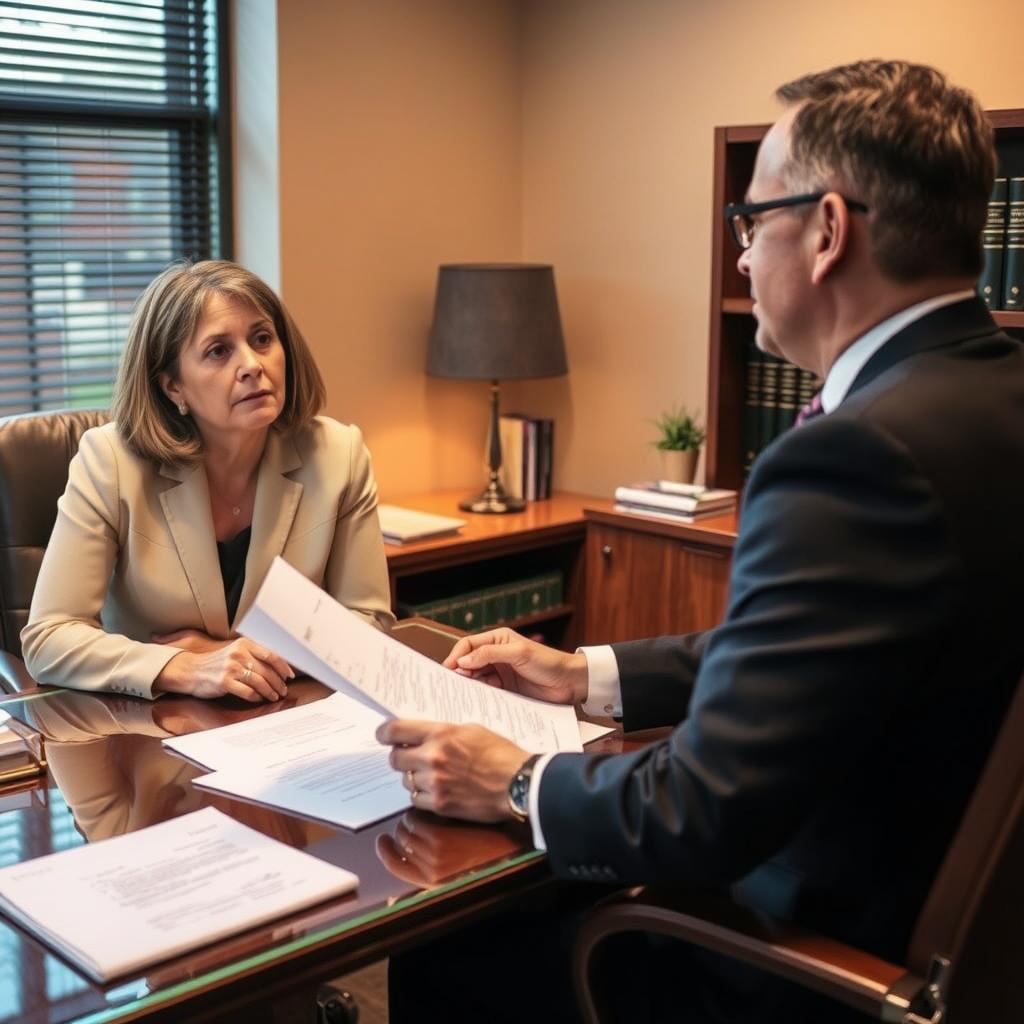
Military Divorce Lawyer Arlington County, VA
You’re an active‑duty service member stationed at the Pentagon, Fort Myer, or another Northern Virginia installation. Your marriage is ending, and the legal questions are piling up faster than a pre‑deployment checklist. What state has jurisdiction? Will the Servicemembers Civil Relief Act (SCRA) pause the proceedings while you’re overseas? How will your military retirement pay be divided under Virginia’s equitable distribution rules? And who decides where the children live when you’re subject to PCS orders every few years? A military divorce in Arlington County demands more than a generic family‑law approach—it requires counsel who understand both the Virginia court system and the interplay of federal military statutes. Mr. Sris and his Of Counsel team at Law Offices Of SRIS, P.C. Concentrate on precisely this intersection, helping service members and their spouses navigate the unique demands of a military divorce. To request a consultation, call (888) 437‑7747.
What Military Divorce Means in Arlington County
Arlington County sits at the heart of the national capital region, home to the Pentagon, Joint Base Myer‑Henderson Hall, and thousands of active‑duty personnel, reservists, and civilian defense employees. When a military marriage dissolves here, the divorce must satisfy Virginia’s residency requirement—at least one spouse must have been a bona fide resident and domiciliary of the Commonwealth for six months before filing. For service members who are stationed in Virginia under military orders but maintain a home of record elsewhere, establishing domiciliary intent is often the first contested issue.
The Arlington County Circuit Court, located at 1425 N. Courthouse Rd, handles all divorce, equitable distribution, and spousal support matters. Because Virginia is an equitable distribution state, the court divides marital property fairly but not necessarily equally, scrutinizing 11 statutory factors under Va. Code § 20‑107.3. Military pensions, TSP accounts, and SBP benefits are treated as marital property to the extent they were earned during the marriage. The Uniformed Services Former Spouses’ Protection Act (USFSPA) gives state courts the authority to divide disposable retired pay, but the ten‑year overlap rule affects direct payment from DFAS—making it critical to address these issues correctly in the final decree. Meanwhile, custody and support matters that are not part of the divorce action itself proceed through the Arlington County Juvenile and Domestic Relations District Court, which applies Virginia’s best‑interest factors while accounting for the realities of military life, including frequent relocations and deployment schedules.
Virginia law permits a no‑fault divorce after six months of separation if there are no minor children and the parties have signed a written separation agreement.
Source: Va. Code § 20‑91(9)(b). Virginia Code § 20‑91
Reviewed by Mr. Sris, admitted in VA/MD/DC/NJ/NY.
How Mr. Sris and His Of Counsel Handle Military Divorce Cases
When a client walks into our Arlington location—by appointment only, at 1655 Fort Myer Dr, Suite 700—the first step is a careful jurisdictional analysis. We determine whether Virginia has proper venue, whether the SCRA’s stay provisions apply, and how the spouse’s military status interacts with state‑law residency requirements. Because military families often move across state lines, we also evaluate whether filing in another jurisdiction would better serve our client’s interests.
Once jurisdiction is confirmed, the team develops a strategy that accounts for the military‑specific aspects of the case. For the division of retirement benefits, we work with forensic accountants and valuation attorneys to calculate the marital share of the pension and prepare the necessary orders for DFAS processing. For custody matters, we advocate for parenting plans that accommodate unpredictable duty schedules, factoring in the possibility of future PCS moves and the non‑military parent’s rights. Throughout the process, Mr. Sris draws on his former prosecutor’s experience to craft a disciplined, evidence‑based approach, while his Of Counsel attorneys bring extensive knowledge of Virginia’s family‑law courts. The goal is a resolution that protects the service member’s career, the family’s financial stability, and the children’s well‑being—whether through negotiated settlement or trial.
About Mr. Sris and His Of Counsel Team
Mr. Sris, Owner and Founder of Law Offices Of SRIS, P.C., has practiced since 1997 and is admitted in Virginia, Maryland, the District of Columbia, New Jersey, and New York. His background as a former prosecutor informs his strategic focus on identifying the strongest legal arguments and presenting them effectively in court. Mr. Sris testified before the Virginia House Courts of Justice Committee in support of 2019 HB 635 (chief patron Del. David Bulova), a bill that revised the law governing the division of retirement assets in divorce. That experience gives him a unique understanding of the statutory framework that governs the division of military pensions.
Supporting Mr. Sris is a team of Of Counsel attorneys—all engaged through Excella—who bring additional depth to the firm’s family‑law practice. Their collective experience includes regular appearances in Arlington County Circuit Court and the Juvenile and Domestic Relations District Court, plus a practical understanding of how the SCRA and USFSPA operate on the ground. Mr. Sris and his Of Counsel bring extensive combined legal experience. Results may vary.
Frequently Asked Questions
Does the Servicemembers Civil Relief Act stay my divorce case if I am deployed?
The SCRA allows a court to stay civil proceedings, including divorce, while a service member is on active duty and unable to appear. The service member must apply for the stay and demonstrate that military duties materially affect the ability to participate. The stay is not automatic; a judge may grant or deny it after considering the facts. If a stay is entered, the case pauses for a minimum of 90 days, with the possibility of additional extensions. For guidance on how the SCRA may apply to your specific situation, reach Law Offices Of SRIS, P.C. at (888) 437‑7747.
How is my military retirement divided in a Virginia divorce?
Virginia treats the marital share of military retired pay as divisible property under equitable distribution. The court is not required to split it 50/50; instead, it considers factors such as the length of the marriage, the contributions of each spouse, and the sources of the retirement assets. Under the Uniformed Services Former Spouses’ Protection Act, the state court may award a portion of disposable retired pay directly from DFAS only if the parties were married for at least ten years overlapping the service member’s creditable military service. For a consultation on your specific retirement division, contact Law Offices Of SRIS, P.C. at (888) 437‑7747.
Can I file for divorce in Arlington County if I am stationed here but my spouse lives in another state?
Yes, if you meet Virginia’s residency and domiciliary requirements. You must be a bona fide resident and domiciliary of Virginia for at least six months before filing. Being stationed in Virginia under military orders can help establish residency, but domiciliary intent—the intention to remain in Virginia permanently or indefinitely—is a separate question that the court may examine. If your spouse lives elsewhere, you may still be able to obtain personal jurisdiction over them or proceed with the divorce even if the court cannot divide property or order support without jurisdiction over the absent spouse. To discuss the details of your matter, contact Law Offices Of SRIS, P.C. at (888) 437‑7747.
What happens to child custody when the military parent receives PCS orders?
A permanent change of station order does not automatically modify custody, but it often triggers a request for a relocation or custody modification in Virginia courts. The parent who is relocating must typically give notice to the other parent and may need to seek court approval to move the child. Virginia judges evaluate relocation under the child’s best interests, weighing factors such as the reason for the move, the impact on the child’s relationship with the non‑moving parent, and the feasibility of a revised visitation schedule. Military families frequently address these scenarios in their parenting plan from the outset to reduce conflict later. For a consultation, reach Mr. Sris and his Of Counsel at (888) 437‑7747.
Do I need a lawyer for an uncontested military divorce in Arlington County?
You are not legally required to hire a lawyer, but the military‑specific issues involved make legal guidance strongly advisable. Even an uncontested divorce that starts amicably can later present disputes over the division of the TSP, survivor benefits, or child support calculations under Virginia guidelines. Service members also need to ensure that any waiver of SCRA protections is knowing and voluntary. Mr. Sris and his Of Counsel team routinely handle uncontested military divorces, preparing separation agreements and final decrees that comply with both state law and federal military requirements. For guidance on your specific situation, reach Law Offices Of SRIS, P.C. at (888) 437‑7747.
For a complete statutory analysis of military divorce in Virginia, visit our main site’s guide on Virginia Divorce and Family Law.
Law Offices Of SRIS, P.C. — Arlington Location
1655 Fort Myer Dr, Suite 700, Room 719, Arlington, VA 22209
By appointment only. Call (888) 437‑7747 to schedule.
Attorney advertising. Prior results do not guarantee a similar outcome.
Results may vary.
Case results depend on a variety of factors unique to each case.