
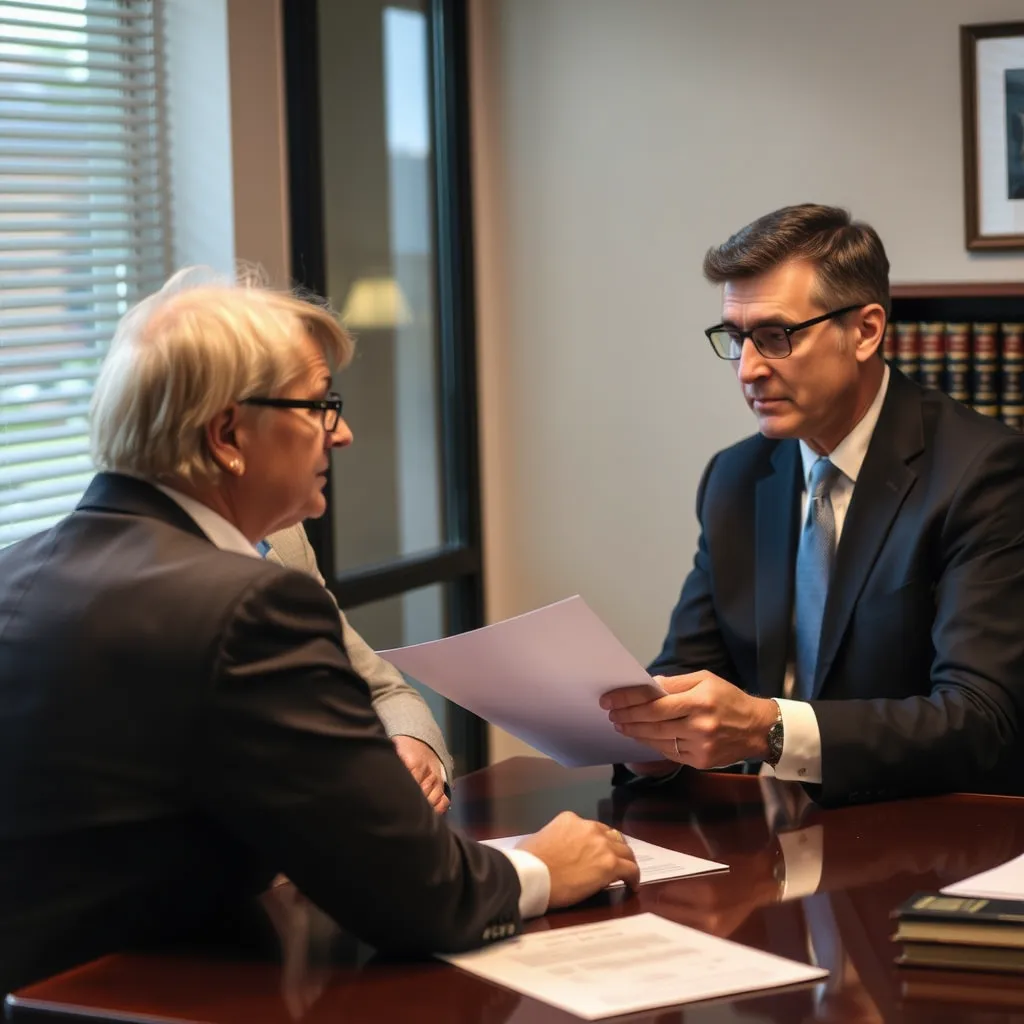
Separation Lawyer Falls Church, VA
When a marriage reaches a point where living together is no longer possible, the law provides a framework for separating your lives in a way that protects your interests and those of your children. In Falls Church, an independent city within the Seventeenth Judicial District of Virginia, separation is the gateway to a divorce under Virginia Code § 20-91. A separation lawyer assists in establishing the date and circumstances of separation, negotiating and drafting a separation agreement, and ensuring that your separation is structured to support a smooth divorce if that becomes your path. At Law Offices Of SRIS, P.C., we concentrate on family law across Virginia and bring experience in the procedural nuances of Falls Church courts. Our Fairfax location represents clients throughout the Falls Church area. For a consultation, reach our firm at (888) 437-7747. Law Offices Of SRIS, P.C. – Advocacy Without Borders.
What Separation Means in Falls Church
In Virginia, separation has a specific legal meaning that goes beyond simply living apart. To use separation as a ground for a no-fault divorce under Va. Code § 20-91(9), the parties must have lived separate and apart without any cohabitation for a continuous period. The length of the required separation period depends on whether there are minor children of the marriage and whether the couple has signed a written separation agreement. The Falls Church Circuit Court, located at 300 Park Avenue, has exclusive jurisdiction over divorce and equitable distribution matters. Meanwhile, standalone custody, support, and protective order matters are heard at the Falls Church Juvenile and Domestic Relations District Court. An experienced family law attorney helps you understand which court will handle each facet of your case and what the separation timeline means for your unique situation.
Falls Church is a compact city with its own judicial system, and local court procedures can affect how separation-related motions are handled. Pendente lite relief—temporary support or custody orders while a divorce is pending—may be requested from the Circuit Court, and each judge may have preferences about how separation evidence is presented. For example, corroborating testimony is required to prove the separation date at an uncontested divorce hearing. A separation lawyer familiar with Falls Church courts can coordinate the necessary witnesses and documentation, helping to avoid delays and procedural missteps.
How Mr. Sris and His Of Counsel Handle Separation Cases
Mr. Sris and his Of Counsel approach each separation matter by first clarifying the client’s goals: whether the priority is a negotiated separation agreement, a swift uncontested divorce, or protection of assets during a period of separation. They evaluate whether a written separation agreement—resolving issues such as property division, spousal support, and child custody—is achievable. Where both parties can reach an agreement, the firm drafts a separation agreement that meets the statutory requirements under Virginia law, positioning the case for a future no-fault divorce. Where negotiation is not immediately successful, Mr. Sris and his Of Counsel represent clients in contested proceedings, including pendente lite motions and equitable distribution hearings.
The firm’s multi-state perspective is valuable to Falls Church residents who may have connections to Maryland or the District of Columbia. Mr. Sris, admitted in Virginia, Maryland, the District of Columbia, New Jersey, and New York, is positioned to address cross-jurisdictional issues such as out-of-state property or custody that spans state lines. All case strategy is built on the individual facts of each matter, without guarantees of a particular outcome.
About Mr. Sris and His Of Counsel Team
Mr. Sris, Owner and Founder of Law Offices Of SRIS, P.C., established the firm in 1997. As a former prosecutor, he brings insight into how opposing parties and the court may evaluate evidence and credibility in contested family law cases. Mr. Sris testified before the Virginia House Courts of Justice Committee in support of 2019 HB 635 (chief patron Del. David Bulova), a bill that revised the equitable distribution statute, Va. Code § 20-107.3(g). His Of Counsel team includes family law attorneys who work collaboratively on separation and divorce matters across Northern Virginia. Together, Mr. Sris and his Of Counsel draw on multi-state experience to guide Falls Church clients through the separation process.
All non‑Sris attorneys serve as Of Counsel and are engaged through Excella. They appear in Falls Church courts and handle matters such as separation agreements, custody modifications, and spousal support negotiations. The firm’s Fairfax location is by appointment only; consultations can be scheduled by calling (888) 437-7747.
Frequently Asked Questions
What is the difference between a legal separation and a trial separation in Virginia?
Virginia does not recognize a formal “legal separation” status, but separation is a necessary component of a no-fault divorce. A trial separation is an informal arrangement where spouses live apart without a court‑ordered framework. A separation that leads to divorce must meet specific statutory requirements: the parties must live separate and apart, without cohabitation, for the required period and generally with the intent to end the marital relationship. A written separation agreement can address property, support, and custody issues, providing structure even though there is no legal separation status. Reach Law Offices Of SRIS, P.C. at (888) 437-7747 to discuss an appropriate approach for your situation.
How long must we be separated before filing for divorce in Falls Church?
In Virginia, a no‑fault divorce requires a separation period of one year, or six months if there are no minor children and the parties have entered into a written separation agreement. The timeline is governed by Va. Code § 20‑91(9). The separation period must be continuous, without resuming marital relations. Even after the separation period has run, the parties must still file a complaint for divorce in the Falls Church Circuit Court and present corroborating evidence of the separation date. Timelines can be affected by court scheduling and the complexity of the issues. To understand how the separation period applies to your facts, consult our firm.
What does a separation agreement cover in Virginia?
A separation agreement generally resolves all matters related to the marriage, including property division, spousal support, child custody, and child support. Under Virginia law, a valid separation agreement can be incorporated into a final divorce decree and becomes enforceable as a court order. The agreement must be in writing and signed by both parties. It can also address the division of debts, personal property, and real estate. Having an attorney review the agreement helps ensure it accurately reflects your intentions and complies with Virginia statutes. Contact us for guidance on drafting or reviewing a separation agreement.
Can a separation agreement be enforced if one party does not follow it?
Yes, a properly executed separation agreement that has been incorporated into a court order is enforceable through the court’s contempt powers. If the agreement has not yet been incorporated into a divorce decree, it may still be enforced as a contract under Virginia law. Enforcement remedies can include a court order to compel compliance, a monetary judgment for unpaid support, or a finding of contempt. The specific enforcement mechanism depends on the terms of the agreement and the nature of the violation. The process requires filing a motion with the appropriate court, typically the Falls Church Circuit Court. To discuss enforcement options, reach our firm at (888) 437-7747.
Do I need a lawyer to create a separation agreement in Falls Church?
You are not legally required to have a lawyer draft your separation agreement, but legal guidance helps ensure the agreement is thorough, enforceable, and tailored to your situation. A separation agreement that fails to address all relevant issues—such as retirement assets, tax consequences, or future modifications—can lead to later disputes and additional court proceedings. An attorney can also identify potential pitfalls and ensure that the agreement complies with Virginia Code § 20‑109.1 and related statutes. Mr. Sris and his Of Counsel draft separation agreements with attention to Virginia’s equitable distribution framework and the best interests of the child standard. Schedule a consultation by calling (888) 437-7747.
What role does the Falls Church court play in separation matters?
The Falls Church Circuit Court has exclusive jurisdiction over divorce and related equitable distribution matters, while the Falls Church Juvenile and Domestic Relations District Court handles standalone custody, support, and protective orders. Separation itself is not a court‑initiated status; it is a factual condition that may be presented as evidence in a divorce proceeding. When pendente lite relief is needed—such as temporary spousal support or custody—a motion must be filed in the Circuit Court. The court also reviews and may incorporate a separation agreement into a final decree. Our firm appears regularly in both Falls Church courts on behalf of clients.
For more information, see these official Virginia resources:
Related family law pages:
- Family Law Lawyer Fairfax County
- Family Law Lawyer Fairfax City
- Family Law Lawyer Prince William County
- Family Law Lawyer Manassas
- Family Law Lawyer Manassas Park
Last reviewed: July 2026
Attorney advertising. Prior results do not guarantee a similar outcome.
Case results depend on a variety of factors unique to each case.