
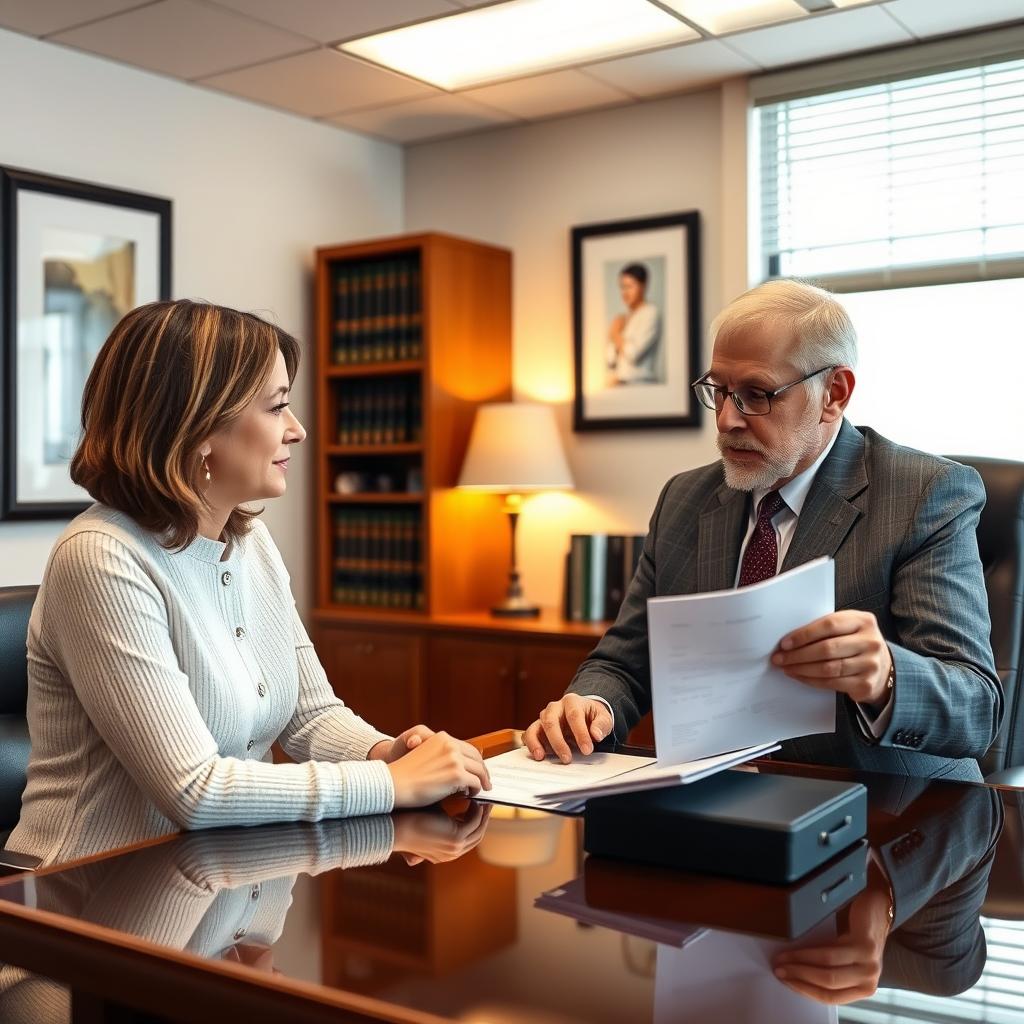
Visitation Modification Lawyer Arlington County, VA
In Arlington County, visitation arrangements are rarely final. Life changes—a parent moves, a work schedule shifts, or a child’s needs evolve—and the visitation order that once worked smoothly may no longer serve the child’s best interests. Virginia law provides a path to address these changes through visitation modification, but the process requires more than simply asking the court for a different schedule. A parent seeking to modify a visitation order must demonstrate a material change in circumstances since the last order and show that the proposed change is in the child’s best interests. The Arlington County Juvenile and Domestic Relations District Court handles standalone visitation modification petitions, while matters tied to an active divorce or equitable distribution proceeding may be heard in Arlington County Circuit Court. Mr. Sris and the firm’s Of Counsel attorneys represent parents throughout Arlington, Crystal City, Rosslyn, Clarendon, Ballston, Pentagon City, and Shirlington in visitation modification proceedings. For a consultation about your situation, call Law Offices Of SRIS, P.C. at (888) 437‑7747.
What Visitation Modification Means in Arlington County
Visitation modification refers to a court‑ordered change to an existing visitation schedule. Unlike an initial custody or visitation determination, a modification proceeding does not re‑litigate the entire parenting arrangement from scratch. Instead, Virginia law requires the parent requesting the change to prove that there has been a material change in circumstances since the entry of the previous order and that modifying visitation is in the best interests of the child. The standard derives from Va. Code § 20‑124.2, which governs court‑ordered visitation rights, and from the broader best‑interests framework set out in Va. Code § 20‑124.3. The court retains discretion to adjust visitation when the facts warrant it, but the burden rests squarely on the moving party.
In Arlington County, visitation modification cases are typically heard in the Juvenile and Domestic Relations District Court when no divorce action is pending. The Arlington County J&DR Court has jurisdiction over standalone custody, visitation, and support matters. If the visitation issue arises within a divorce case that has not yet been finalized—or if post‑divorce modifications involve property or spousal support issues simultaneously—the Arlington County Circuit Court may be the appropriate forum. Both courts are located at 1425 N. Courthouse Rd, Arlington, VA 22201. The firm’s attorneys are familiar with the procedures and expectations of both benches. Because every judge evaluates the statutory factors independently, the outcome depends heavily on the specific evidence presented, the child’s circumstances, and the credibility of each parent’s showing. No single factor controls the decision, and the court may consider any relevant evidence that speaks to the child’s welfare. Mediation is available but not mandatory in Virginia, and many families resolve modification disputes through negotiation outside the courtroom.
How Mr. Sris and the Firm’s Of Counsel Attorneys Handle Visitation Modification Cases
Visitation modification cases turn on the ability to present clear, admissible evidence of a material change in circumstances and to persuasively connect that change to a specific, workable modification of the visitation schedule. The firm’s approach begins with a thorough review of the existing court order, the history between the parents, and the facts that allegedly support a different arrangement. The attorney discusses with the client whether a genuine material change exists—such as a substantial relocation, a new work schedule that consistently conflicts with the current visitation plan, or a demonstrable shift in the child’s educational or medical needs—and evaluates the likelihood that a judge would find that the proposed change promotes the child’s best interests.
In many cases, negotiated resolution is possible and often faster than litigation. Mr. Sris and the firm’s Of Counsel attorneys explore whether both parents can agree on a modified parenting schedule and memorialize it in a consent order, which the court typically approves without a contested hearing. When agreement is not feasible, the firm prepares the case for court, marshaling testimony, documentary evidence, and, where appropriate, input from professionals such as school counselors or medical providers. The process is always tailored to the specific facts; there is no one‑size‑fits‑all strategy for visitation modification. The goal is to present the court with a clear, child‑centered narrative that satisfies the legal standard while protecting the parent’s relationship with the child. Throughout, the attorney keeps the client informed of the procedural steps and the realistic range of possible outcomes.
About Mr. Sris and the Firm’s Of Counsel Attorneys
Mr. Sris founded Law Offices Of SRIS, P.C. in 1997 and serves as its Owner and Founder. A former prosecutor, he has practiced across Virginia, Maryland, the District of Columbia, New Jersey, and New York. His background includes a strong understanding of courtroom procedure, evidence presentation, and cross‑examination—skills that transfer directly to contested family law hearings. Mr. Sris testified before the Virginia House Courts of Justice Committee in support of 2019 HB 635 (chief patron Del. David Bulova). The firm’s Of Counsel attorneys bring extensive combined legal experience between Mr. Sris and his Of Counsel. Results may vary.
Every attorney who works on family law cases at the firm concentrates on the real‑world impact the proceeding has on parents and children. The team’s collective familiarity with Arlington County courts—both the J&DR District Court and the Circuit Court—enables it to advise clients on what to expect from the process. The firm’s practice is built on direct attorney‑client communication, careful preparation, and a commitment to advocating for the child’s welfare without losing sight of the parent’s rights. To discuss your visitation modification matter with Mr. Sris or a member of the firm’s Of Counsel, call (888) 437‑7747.
Frequently Asked Questions
What is visitation modification in Virginia?
Visitation modification is a court‑ordered change to an existing visitation schedule, granted when a parent proves a material change in circumstances and that the new schedule serves the child’s best interests. Virginia law does not allow modification simply because one parent wants a different arrangement; the moving parent must present evidence of a substantial, unforeseen change since the last order. Common examples include a parent’s relocation, a significant change in work hours, or the child’s evolving developmental needs. The court applies the trusted‑interests factors set out in Va. Code § 20‑124.3. The process begins with a petition filed in the Arlington County Juvenile and Domestic Relations District Court or, if tied to a divorce, in the Arlington County Circuit Court. An experienced family law attorney can assess whether the facts support a modification and guide you through the required steps.
When can a parent request a visitation modification in Arlington County?
A parent may request a visitation modification whenever a material change in circumstances has occurred since the entry of the existing order and the requested modification is in the child’s best interests. There is no fixed waiting period under Virginia law, but the change cannot be one that was foreseeable at the time the original order was entered. For instance, a parent who accepts a new job with an unpredictable schedule may have grounds to seek a modification promptly, while a minor, temporary scheduling conflict likely does not meet the threshold. The parent must also demonstrate that the new arrangement would be better for the child—not simply more convenient for the requesting parent. Because the standard is fact‑sensitive, it is important to consult an attorney before filing. The firm evaluates each situation individually, examining whether the change is substantial enough to convince an Arlington County judge to alter a standing visitation order.
How does the court decide a visitation modification case?
The court evaluates whether the parent requesting the modification has met the two‑part test: a material change in circumstances and a showing that the proposed modified visitation schedule promotes the child’s best interests. The judge considers the ten statutory factors under Va. Code § 20‑124.3, including the child’s relationship with each parent, each parent’s willingness to support the other’s relationship with the child, the child’s needs, and any history of abuse. The court may also hear testimony from witnesses, review school and medical records, and consider input from a guardian ad litem if one has been appointed. In Arlington County, depending on the forum, the proceeding may be a bench trial in the J&DR District Court or a hearing in the Circuit Court. The court has broad discretion to craft a visitation schedule that serves the child’s welfare. There is no presumption that the existing schedule should remain unchanged; the party seeking modification must affirmatively prove its case.
Do I need a lawyer for a visitation modification in Virginia?
You are not required to have a lawyer to petition for visitation modification, but the legal standard is demanding, and a parent who attempts to navigate the process without counsel may find it difficult to present the necessary evidence and legal argument. Visitation modification hearings require you to meet the burden of proof, introduce admissible evidence, and, if opposed, respond to the other parent’s evidence. A family law attorney can help you determine whether your facts constitute a material change, gather supporting documentation, and frame your request in terms of the child’s best interests. If the other parent is represented, proceeding without counsel can put you at a distinct disadvantage. For parents in Arlington, Crystal City, Rosslyn, Clarendon, Ballston, Pentagon City, or Shirlington, the firm offers consultations to discuss whether seeking modification is appropriate under the circumstances.
What should I bring to a consultation about visitation modification?
Bring a copy of the current custody and visitation order, any prior court orders involving the child, recent pay stubs or evidence of a changed work schedule, school or medical records that relate to the change you are asserting, and a written summary of the facts that you believe show a material change in circumstances. If there are text messages, emails, or other communications between you and the other parent that document the issue, bring those as well. The attorney will review the materials to assess whether your situation likely meets the legal threshold and to discuss the trusted strategy—whether negotiation, mediation, or court. Having organized documentation at the initial consultation allows the attorney to give you a realistic sense of what to expect. There is no need to over‑prepare; the focus should be on the key facts that have changed since the last court order. The firm’s consultations are by appointment; call (888) 437‑7747 to schedule.
How do I start the modification process in Arlington County?
You start by filing a petition for modification in the appropriate Arlington County court, accompanied by a filing fee, and serving the other parent according to the rules of civil procedure. The exact form and procedure depend on whether your case arises in the Juvenile and Domestic Relations District Court or the Circuit Court. The J&DR Court uses specific forms for custody and visitation modification, while the Circuit Court’s process follows the general rules for divorce and equitable distribution matters if the case is tied to a pending divorce. After the petition is filed and served, the court typically schedules a hearing. In the interim, both sides may engage in discovery and, in many cases, attempt to reach agreement. An attorney can ensure the correct court is chosen, the petition contains all necessary allegations, and service is properly effected. Because procedural missteps can delay resolution, most parents benefit from having counsel handle the filing from the outset.
Attorney advertising. Prior results do not guarantee a similar outcome. Results may vary.
Case results depend on a variety of factors unique to each case.