
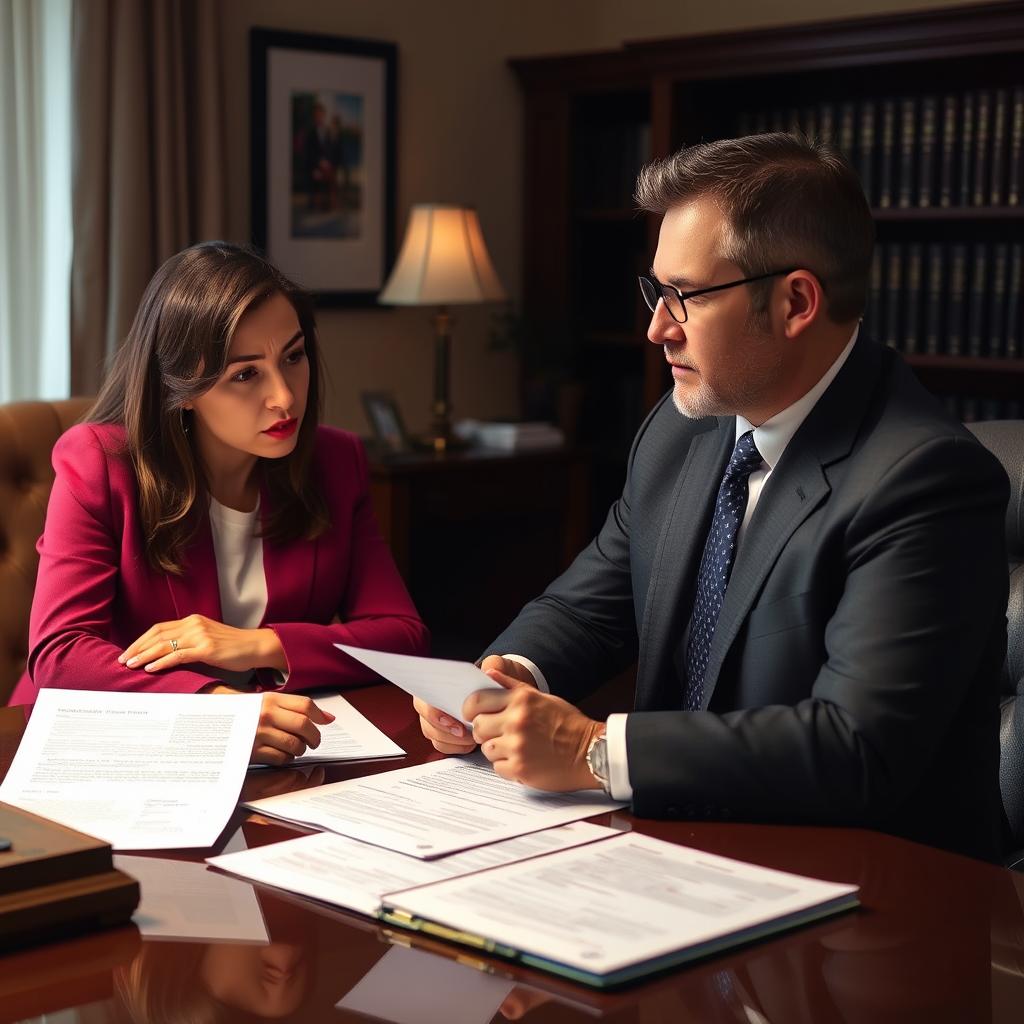
Postnuptial Agreement Lawyer Prince William County, VA
A postnuptial agreement in Virginia is governed by the Premarital Agreement Act, Va. Code § 20‑147 et seq., and serves as a contract between spouses that defines property rights, spousal support obligations, and the division of assets should the marriage end. In Prince William County, these agreements are reviewed and enforced by the Prince William County Circuit Court, located at 9311 Lee Avenue, Suite 230, Manassas, VA 20110, which has exclusive jurisdiction over divorce and equitable distribution matters. Law Offices Of SRIS, P.C., founded in 1997, represents clients throughout Prince William County—including Manassas, Woodbridge, Dale City, Dumfries, Gainesville, Haymarket, Lake Ridge, and Occoquan—in drafting, reviewing, and litigating postnuptial agreements. Mr. Sris, the firm’s Owner and Founder, is a former prosecutor who understands how Virginia courts evaluate marital contracts under the state’s equitable distribution framework. Together with the firm’s experienced Of Counsel attorneys, he assists spouses who want to clarify financial rights, protect business interests, or resolve uncertainty about property division. To discuss your situation, call (888) 437‑7747. Law Offices Of SRIS, P.C. – Advocacy Without Borders.
What Postnuptial Agreements Mean in Prince William County
Virginia is an equitable distribution state under Va. Code § 20‑107.3, which means marital property is divided fairly—not necessarily equally—when a marriage is dissolved. A postnuptial agreement allows spouses to customize that division ahead of time, setting forth which assets remain separate, how jointly acquired property will be allocated, and whether spousal support will be waived or limited. In Prince William County, these agreements carry significant weight because the Circuit Court will generally enforce a valid, voluntarily executed postnuptial contract unless it was the product of fraud, duress, or unconscionability.
The communities that make up Prince William County—from the suburban neighborhoods of Woodbridge and Dale City to the more rural stretches near Haymarket and Gainesville—often see couples with commuter lifestyles, military relocations, and blended families. A postnuptial agreement can be particularly valuable when one spouse starts a business, receives an inheritance, or when the couple wants to protect children from a prior relationship. Because the Circuit Court handles all divorce and equitable distribution filings, any challenge to a postnuptial agreement will be heard at the Manassas courthouse on Lee Avenue. Working with an attorney who is familiar with local court practices—including the importance of thorough financial disclosure and independent legal advice—helps ensure the agreement is prepared to withstand judicial scrutiny.
How Mr. Sris and the Firm’s Of Counsel Attorneys Handle Postnuptial Agreement Cases
Every postnuptial agreement begins with a clear understanding of the spouses’ goals. The firm’s attorneys meet with clients to identify what property and income streams are at stake, whether the agreement is meant to preserve a family business, address a change in one spouse’s career, or resolve financial tension. They then draft an agreement that complies with Virginia law, including full and fair disclosure of assets and liabilities. If the other spouse already has counsel, the firm negotiates terms directly; if both parties are represented by separate attorneys, the document can be finalized with far less risk of a later challenge.
When a dispute arises over an existing postnuptial agreement—such as one spouse alleging it was signed under duress or that material information was concealed—the firm represents clients in contested hearings before the Prince William County Circuit Court. The process may involve discovery, depositions, and, if necessary, trial advocacy. Mr. Sris and the firm’s Of Counsel attorneys draw on decades of combined litigation experience to present compelling arguments about the agreement’s validity and the parties’ intent. Throughout, they work toward efficient, favorable resolutions without unnecessary court appearances. As with any family law matter, outcomes vary; every case turns on its own facts.
About Mr. Sris and the Firm’s Of Counsel Attorneys
Mr. Sris founded Law Offices Of SRIS, P.C. in 1997 after serving as a prosecutor. His trial experience gives him a practical understanding of how Virginia judges evaluate contracts and credibility—an advantage when the enforceability of a postnuptial agreement is challenged. Mr. Sris testified before the Virginia House Courts of Justice Committee in support of 2019 HB 635 (chief patron Del. David Bulova), legislation that refined aspects of the equitable distribution statute. He is admitted to practice in Virginia, Maryland, the District of Columbia, New Jersey, and New York.
The firm’s Of Counsel attorneys include litigators with backgrounds as former prosecutors and law enforcement professionals. Collectively, they bring extensive combined legal experience to family law matters, including the negotiation and enforcement of marital agreements. When you work with the firm, your postnuptial agreement receives attention from an experienced team that understands both the drafting formalities and the courtroom realities of Prince William County. Results may vary.
Frequently Asked Questions
What is a postnuptial agreement in Virginia?
A postnuptial agreement is a written contract between spouses, executed after marriage, that defines how property, debts, and spousal support will be handled if the marriage ends. In Virginia, such agreements are authorized by the Premarital Agreement Act (Va. Code § 20‑147 et seq.) and are often used to clarify financial rights, protect assets brought into the marriage, or resolve disagreements about money. Unlike a separation agreement, a postnuptial agreement is signed while the couple remains together, and it must be entered voluntarily with full financial disclosure to be enforceable.
How does a postnuptial agreement differ from a prenuptial agreement?
The key difference is timing: a prenuptial agreement is signed before the wedding, while a postnuptial agreement is executed after the marriage has taken place. Both documents are governed by the same Virginia statute and serve similar purposes—defining property rights and limiting spousal support. However, postnuptial agreements may face greater scrutiny from a Prince William County judge because the parties are already married, and the court will look carefully for evidence of coercion or overreaching. Independent legal representation for each spouse strengthens the agreement’s enforceability.
Can a postnuptial agreement be enforced in Prince William County, Virginia?
Yes, a valid postnuptial agreement is enforceable in Prince William County Circuit Court, provided it was entered into freely, with honest disclosure of assets, and without fraud or duress. The court will examine the circumstances surrounding the signing, including whether both parties had the opportunity to consult independent counsel and whether the agreement is unconscionable. If these requirements are met, the judge will typically uphold the contract as part of a divorce or equitable distribution proceeding. An attorney can help ensure the agreement meets Virginia’s legal standards from the outset.
What makes a postnuptial agreement valid in Virginia?
For a postnuptial agreement to be valid, it must be in writing, signed by both spouses, and reflect a voluntary exchange of complete financial information. Virginia courts will also consider whether each party had a meaningful choice and whether the terms are fair at the time of enforcement. Ambiguities, hidden debts, or pressure to sign quickly can all jeopardize the agreement. Working with an experienced family law attorney helps avoid these pitfalls by creating a clear, comprehensive document that can withstand a later challenge in the Prince William County courts.
Do I need a lawyer to create a postnuptial agreement in Prince William County?
You are not legally required to hire a lawyer, but having independent legal counsel greatly reduces the risk that a judge will later set the agreement aside. A properly drafted postnuptial agreement should anticipate future disputes and contain precise language that Virginia courts will respect. An attorney who practices regularly in Prince William County knows the local procedural requirements and the legal standards the Circuit Court applies when reviewing these contracts. For guidance on your specific situation, reach Law Offices Of SRIS, P.C. at (888) 437‑7747.
What issues can a postnuptial agreement address?
A postnuptial agreement can define ownership and division of real estate, bank accounts, retirement assets, business interests, and other property acquired during the marriage, as well as specify whether spousal support will be paid and, if so, in what amount. It can also clarify which debts each spouse is responsible for. However, child custody and child support cannot be predetermined in a postnuptial agreement; those matters are always decided based on the child’s best interests at the time of separation. A carefully crafted agreement provides a clear financial roadmap while respecting Virginia’s public policy regarding children.
Related Family Law Resources
Explore our family law representation in neighboring Virginia counties: Fairfax County family law attorney, Stafford County family lawyer, Fauquier County family law representation, Loudoun County family law counsel, and Arlington County family law services.
Virginia Legal Resources
Review the statutory authority for postnuptial agreements: Virginia Code Title 20, Chapter 8 – Premarital Agreement Act. For information about the Prince William County Circuit Court, visit the Prince William Circuit Court page on Virginia’s Judicial System website.
Attorney advertising. Prior results do not guarantee a similar outcome. Case results depend on a variety of factors unique to each case. Results may vary.