
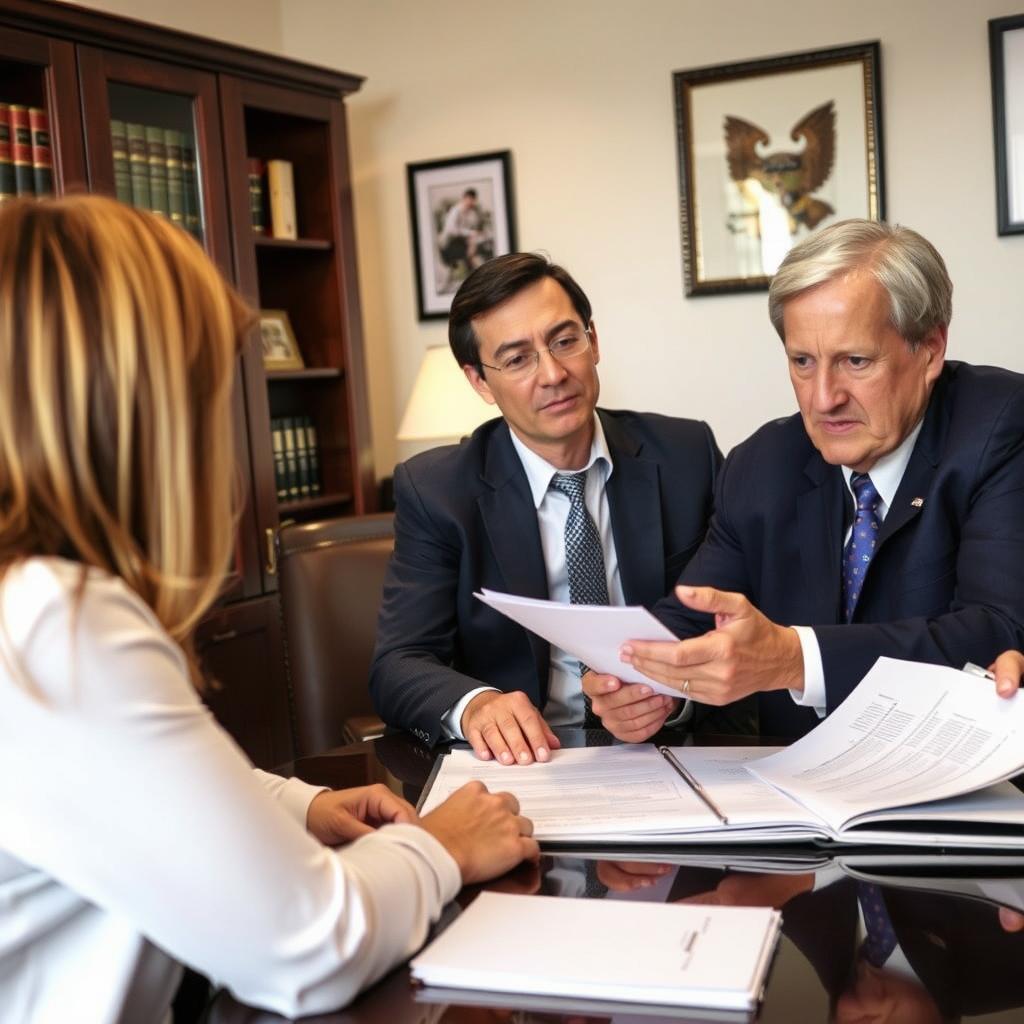
Domestic Abuse Lawyer Loudoun County, VA
Domestic abuse allegations turn family relationships into court proceedings quickly. In Loudoun County, a protective order can be issued based on a petition and ex parte hearing, affecting where you live, whether you can see your children, and your record. Whether you need to obtain a protective order or are responding to one, having a clear understanding of the legal process matters. The attorneys at Law Offices Of SRIS, P.C. represent individuals in protective order hearings, custody matters involving abuse allegations, and divorce cases where domestic abuse is a central issue. Mr. Sris and the firm’s Of Counsel attorneys appear regularly in the Loudoun County Juvenile and Domestic Relations District Court and the Loudoun County Circuit Court. To discuss your situation, reach the firm at (888) 437-7747. Law Offices Of SRIS, P.C. – Advocacy Without Borders.
What Domestic Abuse Means in Loudoun County
Virginia law provides for protective orders through Va. Code § 16.1-253.1 and § 16.1-279.1. An emergency protective order can be granted by a magistrate or judge, often ex parte, followed by a preliminary protective order hearing and potentially a permanent protective order. The Loudoun County Juvenile and Domestic Relations District Court at 18 East Market Street in Leesburg hears these matters. If the parties are married or have children in common, the case may also be part of a divorce or custody action pending before the Loudoun County Circuit Court.
Domestic abuse is not only a criminal law matter; it intersects deeply with family law. Allegations of abuse can influence child custody determinations under Va. Code § 20-124.3, spousal support, and property division. Because of the 20th Judicial District’s procedural expectations, having counsel familiar with both the J&DR Court and the Circuit Court is an advantage. Our Ashburn location serves communities across Loudoun County, including Leesburg, Sterling, Ashburn, South Riding, Purcellville, and Brambleton.
How Mr. Sris and the Firm’s Of Counsel Attorneys Handle Domestic Abuse Cases
Protective order hearings move on a compressed timeline. The firm’s approach is to build a well-prepared presentation of the facts—through witness testimony, documentary evidence, and, where appropriate, expert reports. Mr. Sris, a former prosecutor, understands how to evaluate evidence and anticipate the opposing side’s arguments. The firm’s Of Counsel attorneys contribute experience from a range of legal backgrounds, including prior law enforcement service and extensive litigation in Virginia courts.
Every case is addressed based on its individual circumstances. For a petitioner, the goal is a thorough petition supported by credible evidence. For a respondent, the focus is challenging the sufficiency of the allegations and protecting rights, including contact with children. The firm works to reach resolutions that avoid unnecessary escalation, while preparing for trial when settlement is not possible. Representation extends to related custody, visitation, and divorce proceedings so that the protective order’s impact on the broader family law picture is taken into account.
About Mr. Sris and the Firm’s Of Counsel Attorneys
Mr. Sris, Owner and Founder of Law Offices Of SRIS, P.C., is a former prosecutor who founded the firm in 1997. He is admitted in Virginia, Maryland, the District of Columbia, New Jersey, and New York. Mr. Sris testified before the Virginia House Courts of Justice Committee in support of 2019 HB 635 (chief patron Del. David Bulova). His practice includes complex family law matters and cases that require a detailed understanding of courtroom dynamics.
The firm’s Of Counsel attorneys bring extensive legal experience to domestic abuse cases. Together, they represent clients at all stages—from the initial petition through final hearings and any subsequent modifications. Prior results do not guarantee a similar outcome. Results may vary. based on the specific facts and legal issues involved.
Frequently Asked Questions
What is a protective order in Virginia?
A protective order is a court directive that prohibits contact or certain behaviors between an alleged abuser and the person seeking protection. Virginia law recognizes three types: emergency protective orders (often issued by a magistrate), preliminary protective orders (after a brief hearing), and permanent protective orders (issued after a full hearing where the petitioner must prove the allegation by a preponderance of the evidence). Violating a protective order is a criminal offense. The orders can address custody, use of a shared residence, and other relief the court finds appropriate.
How do I get a protective order in Loudoun County?
You can start by filing a petition at the Loudoun County Juvenile and Domestic Relations District Court, located at 18 East Market Street, Leesburg, VA 20176. If you are in immediate danger, you may seek an emergency protective order through law enforcement or a magistrate. A preliminary protective order hearing is then scheduled quickly. At the hearing, you present evidence—witnesses, documents, and your own testimony—to support the need for protection. An attorney can help prepare the petition, gather evidence, and present your case effectively.
Can domestic abuse allegations affect child custody?
Yes, a finding of domestic abuse is a significant factor in custody and visitation decisions under Virginia law. The court must consider the best interests of the child, and Va. Code § 20-124.3 lists any history of family abuse as one of the ten statutory factors. A protective order can result in supervised visitation or sole custody to the non-abusive parent. Even unproven allegations can influence temporary custody orders. Consulting with a family law attorney early is important to understand how the allegations may affect your case.
Do I need an attorney for a protective order hearing?
You are not required to have an attorney, but representation can help ensure that your evidence is presented clearly and that legal standards are met. Protective order hearings involve rules of evidence and court procedure. An experienced attorney can cross-examine witnesses, object to inadmissible evidence, and frame the case around the statutory factors. For respondents, the stakes are high: a permanent protective order can affect employment, firearm rights, and parental relationships. The firm’s attorneys handle both petitioner and respondent representation.
What if I have been falsely accused of domestic abuse?
False accusations still require a prompt and thorough response because a protective order can be issued based on the petitioner’s testimony alone at an early stage. A respondent has the right to challenge the evidence at a hearing. Presenting contradictory witness testimony, phone records, text messages, and other evidence can help demonstrate the lack of merit. An attorney can identify inconsistencies and procedural defects. Delaying a response can result in a permanent order before you have had a meaningful opportunity to be heard.
How long does a protective order last in Virginia?
An emergency protective order generally expires 72 hours after issuance; a preliminary protective order lasts until a full hearing, typically within 15 days; a permanent protective order can remain in effect for up to two years and may be extended. The duration depends on the court’s findings and the specifics of the case. Violations may lead to criminal contempt charges. An attorney can advise on the timeline and help you comply with all court dates and conditions.
Additional Resources: For more information, visit the Virginia Judicial System’s website at Virginia Juvenile and Domestic Relations District Courts and review the protective order statutes at Va. Code § 16.1-253.1.
Family law pages for nearby counties: Fairfax County Family Law | Prince William County Family Law | Stafford County Family Law | Arlington County Family Law
Attorney advertising. Prior results do not guarantee a similar outcome. Results may vary.
Case results depend on a variety of factors unique to each case.