
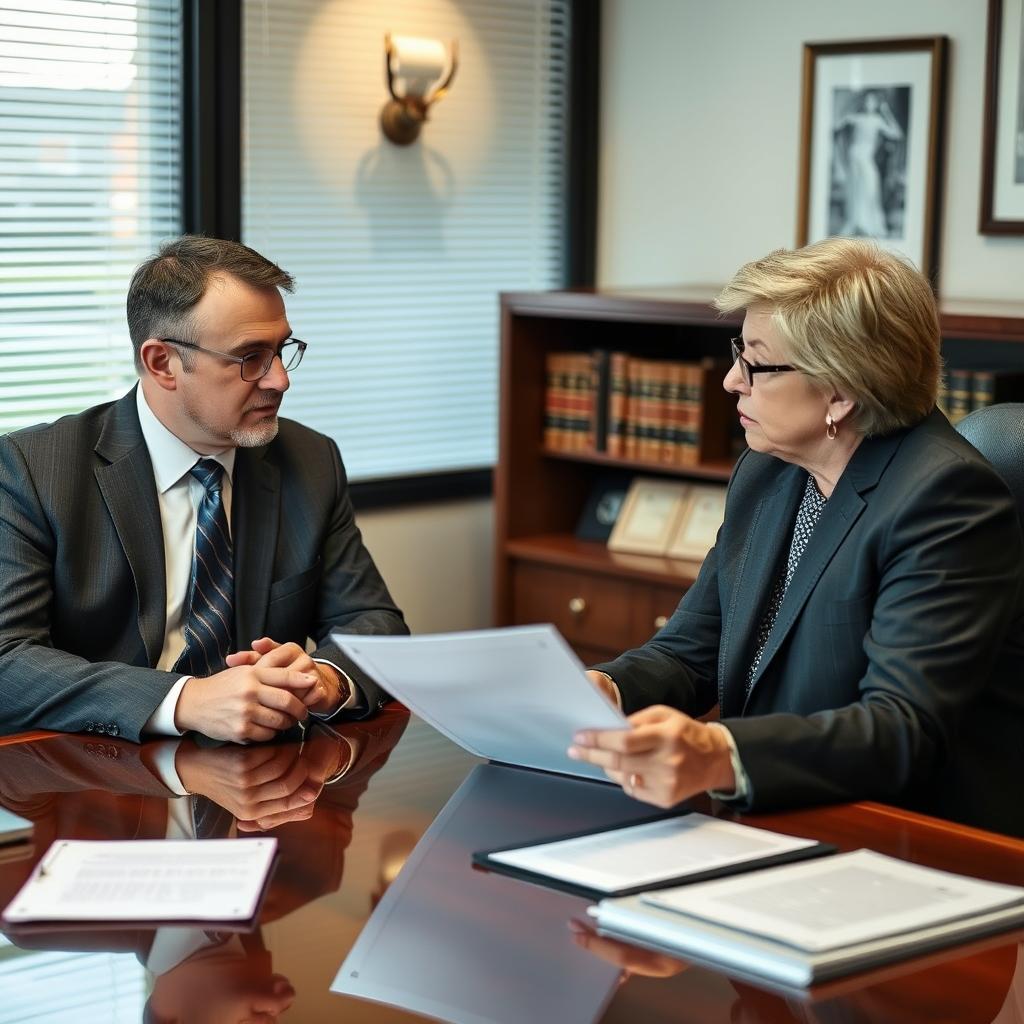
Norfolk Military Divorce Lawyer Prince William County, VA
Military families stationed at Naval Station Norfolk, Joint Base Langley-Eustis, or Marine Corps Base Quantico face unique legal pressures when a marriage ends, and a divorce that involves a service member demands an attorney who understands both Virginia family law and the federal protections that govern active-duty personnel. Law Offices Of SRIS, P.C., founded in 1997, represents military members and their spouses in Norfolk, Prince William County, and throughout Virginia. Mr. Sris and his Of Counsel team have substantial combined legal experience handling the equitable distribution of military retirement, the impact of deployment on custody, and the jurisdictional complications that arise when one party is stationed out of state. Reach our location at (888) 437-7747 to request a consultation about your situation. Law Offices Of SRIS, P.C. – Advocacy Without Borders.
What Military Divorce Means for Service Members in Norfolk and Prince William County, Virginia
A military divorce in Virginia follows the same statutory framework as a civilian divorce—grounds under Va. Code § 20-91, equitable distribution under Va. Code § 20-107.3, and the trusted‑interests custody standard of Va. Code § 20-124.3—but the practical differences are layered and can change the outcome of a case. The Servicemembers Civil Relief Act (SCRA) allows an active‑duty respondent to request a stay of proceedings when military duties materially affect the ability to participate, which can delay a case filed in Norfolk Circuit Court or Prince William County Circuit Court. Meanwhile, the Uniformed Services Former Spouses’ Protection Act (USFSPA) governs how military retired pay is divided, creating a separate set of rules that Virginia’s equitable‑distribution statute must work alongside.
Service members and spouses in Norfolk—home to the largest naval base in the world—frequently confront jurisdictional questions because a service member may be a legal resident of another state while living in Virginia under military orders. Under Virginia law, a divorce action requires at least one party to be a bona fide resident and domiciliary of the Commonwealth for six months before filing (Va. Code § 20-97), which can be satisfied by either the service member or the civilian spouse. The same residency rule applies when the case is brought in Prince William County, where many Marine Corps families live near Quantico. Because Navy and Marine Corps personnel deploy on short notice and follow unpredictable training schedules, the timeline of a divorce, the logistics of discovery, and the practical ability to attend hearings all differ from a typical domestic-relations matter.
Virginia law provides for a no‑fault divorce after six months of separation when the parties have no minor children and have signed a written separation agreement (Va. Code § 20‑91(9)(b)), or after one year of separation in all other cases (Va. Code § 20‑91(9)(a)).
Source: Va. Code § 20‑91. Virginia Code Title 20, Chapter 6, § 20‑91
Reviewed by Mr. Sris, admitted in VA, MD, DC, NJ, and NY.
When a service member expects to be deployed during the divorce, the temporary changes to the parenting schedule and the financial support obligations must be addressed early through pendente lite motions. The Virginia court can enter temporary custody and support orders under Va. Code § 20‑103 so that the parties have a stable arrangement while the final decree is pending. Mr. Sris and his Of Counsel handle military-divorce filings in the Norfolk Circuit Court, the Prince William County Circuit Court, and the Prince William County Juvenile and Domestic Relations District Court for matters involving child custody, visitation, and support.
How Mr. Sris and His Of Counsel Handle Military Divorce Cases
Mr. Sris, a former prosecutor and the Owner and Founder of Law Offices Of SRIS, P.C., works alongside experienced Of Counsel attorneys to manage the overlapping state and federal issues that arise when a military marriage dissolves. The first step is to identify the correct jurisdiction. The firm assesses whether Virginia has both personal and subject‑matter jurisdiction over the service member, whether the SCRA stay is likely to be invoked, and whether the member’s home‑of‑record state might be a more advantageous forum. Once jurisdiction is confirmed, the legal team begins assembling the financial picture, which in a military divorce requires a detailed look at the Leave and Earnings Statement (LES), the Defense Finance and Accounting Service (DFAS) account, and the Thrift Savings Plan (TSP).
Dividing the military pension is a core part of many military divorces. Under the USFSPA, a Virginia court may treat disposable retired pay as marital property subject to equitable distribution only if the service member has at least ten years of creditable service overlapping the marriage—the so‑called “10/10 rule” for direct payment from DFAS. Even when the 10/10 threshold is not met, the pension may still be divided as part of the overall property settlement, though the former spouse would receive payment directly from the member rather than from the government. Mr. Sris and his Of Counsel prepare the necessary military qualifying court orders and coordinate with DFAS to enforce the division of retired pay. For service members still years from retirement, the settlement often uses a “hypothetical” award expressed as a formula, valuing the marital share of the future benefit without waiting until the member retires.
Child custody litigation in military families presents its own challenges. The Virginia court applies the ten best‑interest factors of Va. Code § 20‑124.3, but a service member’s deployment schedule, overseas assignments, and unpredictable duty hours shape how those factors are weighed. The Code of Virginia allows a court to issue a temporary delegation of visitation rights to a family member when the military parent is deployed, and a properly crafted parenting plan can incorporate procedures for virtual visitation and the resumption of the normal schedule after the deployment ends. Mr. Sris and his Of Counsel work toward parenting arrangements that acknowledge the demands of military service while preserving the child’s relationship with both parents. Results may vary.
About Mr. Sris and His Of Counsel Team
Mr. Sris, Owner and Founder of Law Offices Of SRIS, P.C., has practiced since 1997 and is admitted in Virginia, Maryland, the District of Columbia, New Jersey, and New York. He is a former prosecutor whose trial experience informs the strategic decisions the firm makes in contested family‑law matters. Mr. Sris testified before the Virginia House Courts of Justice Committee in support of 2019 HB 635 (chief patron Del. David Bulova). His Of Counsel team includes attorneys with backgrounds that range from prior service as a Virginia State Trooper to extensive child‑welfare experience, giving the firm a broad base of knowledge that is brought to bear on every military‑divorce case. The firm has documented case results across all practice areas since 1997. Results may vary.
Law Offices Of SRIS, P.C. has handled 289 documented matters in Prince William County across all practice areas, with a 97% favorable outcome rate. The firm serves military clients from Quantico to Norfolk through its Fairfax location, at 4008 Williamsburg Court, Fairfax, VA 22032, by appointment. Contact the firm at (888) 437-7747 to request a consultation.
Frequently Asked Questions
How does a military divorce differ from a civilian divorce in Virginia?
A military divorce is governed by the same Virginia statutes as a civilian divorce, but additional federal laws—including the Servicemembers Civil Relief Act and the Uniformed Services Former Spouses’ Protection Act—create distinct rules regarding jurisdiction, service of process, and the division of military retired pay. The SCRA can delay proceedings when the service member is on active duty and unable to respond, while the USFSPA controls how disposable retired pay is treated and whether DFAS will make direct payments to a former spouse. These federal provisions overlay Virginia’s equitable‑distribution system and require careful coordination between state and federal law.
Can a military pension be divided in a Virginia divorce?
Yes, a military pension is treated as marital property subject to equitable distribution under Virginia law if it was earned during the marriage, and a court may award a share of the disposable retired pay to the non‑military spouse. For the former spouse to receive payments directly from the Defense Finance and Accounting Service, the parties must have been married for at least ten years that overlap ten years of creditable military service—the 10/10 rule. If the threshold is not met, the court can still divide the pension, but the member pays the share directly rather than DFAS.
Where should I file for divorce if my spouse is stationed in Norfolk but I live in Prince William County?
You may file in either jurisdiction as long as at least one party meets Virginia’s six‑month residency and domicile requirement. Both the Norfolk Circuit Court and the Prince William County Circuit Court have jurisdiction over divorce actions. The choice often depends on which court is more convenient for the parties and whether child custody or support matters will be heard concurrently in the Juvenile and Domestic Relations District Court. An attorney can evaluate venue factors before the complaint is filed.
What happens to child custody when a military parent is deployed?
Virginia law allows a court to enter a temporary order that delegates the deployed parent’s visitation time to a family member and provides for virtual parenting time during the deployment. After the deployment ends, the original custody order typically resumes. The court considers the best interests of the child under Va. Code § 20‑124.3 and cannot use a parent’s past or possible future deployment as the sole factor to deny custody or visitation. A parenting plan that anticipates deployment cycles can help avoid repeated litigation.
Do I need a lawyer for a military divorce in Virginia?
You are not legally required to hire a lawyer, but the intersection of Virginia family law and the federal statutes that govern military pay and benefits makes military divorces procedurally complex, and legal missteps can have long‑term financial consequences. Issues such as the survivorship benefit plan, the division of the Thrift Savings Plan, and the calculation of the marital share of a pension require precise drafting. To discuss your matter, reach Law Offices Of SRIS, P.C. at (888) 437-7747.
What steps should I take first if I am considering a military divorce?
Begin by gathering your financial documents—including the most recent Leave and Earnings Statement, tax returns, bank statements, and information about any retirement accounts—and then consult with an attorney who can evaluate jurisdiction and advise on the immediate support and custody needs. If there are concerns about domestic safety, a protective order may be sought. Early legal guidance helps ensure that procedural requirements, such as the residency period and proper service under the SCRA, are satisfied from the start.
Additional Resources
Our firm serves clients throughout Northern Virginia. For information about family‑law services in nearby counties, see these pages:
Fairfax County Family Law Lawyer |
Stafford County Family Law Lawyer |
Fauquier County Family Law Lawyer |
Loudoun County Family Law Lawyer |
Arlington County Family Law Lawyer
Official Virginia Primary Sources
Virginia Code Title 20 – Domestic Relations |
Virginia Judicial System
Attorney advertising. Prior results do not guarantee a similar outcome. Results may vary.
Case results depend on a variety of factors unique to each case.